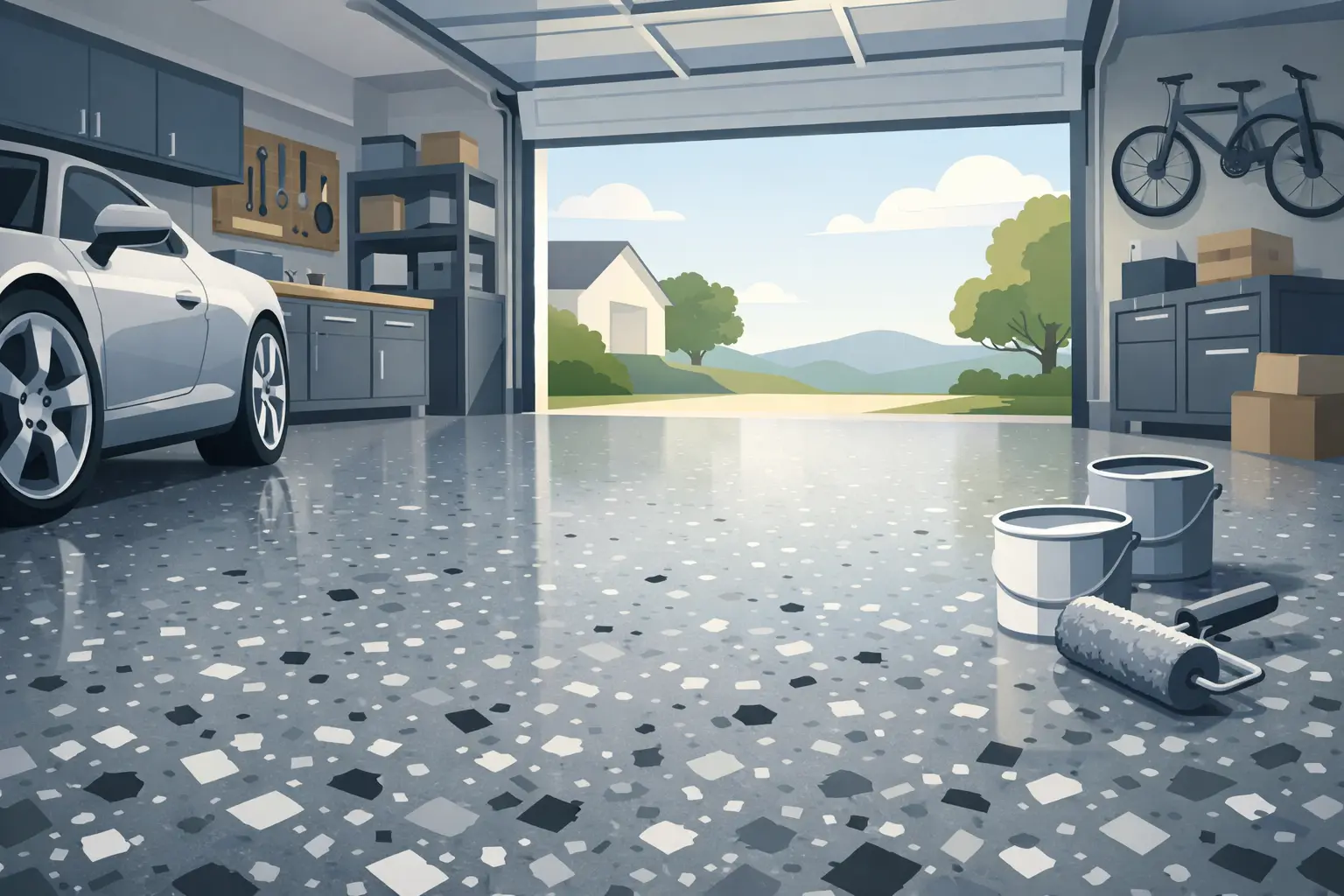
A garage floor has a hard life. Tires bring in road salt, rainwater, oil, gravel, and hot rubber. Lawn equipment leaks. Tools get dropped. That is why a flake epoxy flooring garage system is more than a cosmetic upgrade. Installed correctly, it turns bare, dusty concrete into a cleanable, durable surface that is built for everyday use.
The key phrase is installed correctly. A decorative flake floor can look great on day one and still fail early if the concrete was not properly evaluated, repaired, ground, and protected from moisture. The visible flakes get the attention, but the preparation underneath is what determines whether the coating stays bonded to the slab.
What a Flake Epoxy Garage Floor Actually Is
A flake epoxy floor is a multi-layer resinous coating system. After the concrete is prepared, installers apply a base coat, broadcast colored vinyl flakes into the wet material, remove loose flakes after curing, and seal the surface with a protective clear topcoat.
The flakes serve a practical purpose as well as a decorative one. They break up the solid look of a painted floor, help hide small amounts of dust and debris, and create a textured visual finish. Flake blends are available in colors that work with everything from a clean white garage to a workshop, showroom, or commercial service area.
The finished floor is not simply paint with chips sprinkled on top. Professional systems use compatible primers, base coats, flakes, and clear coats designed to work as one system. Material quality matters, but it cannot compensate for weak surface preparation.
Is Flake Epoxy Flooring for a Garage Worth It?
For many homeowners, the answer is yes, especially when the garage is used as an entry point, workshop, storage space, vehicle area, or extension of the home. A properly installed floor is easier to sweep and mop than raw concrete. It gives oil drips, mud, and salt residue less opportunity to soak into the slab, and it creates a finished appearance that makes the whole garage feel more usable.
It also depends on the condition of the existing concrete and how the space is used. A newer slab with minor wear may need straightforward grinding and coating. An older garage may need crack repair, joint treatment, concrete leveling, or moisture management before a coating system is a good fit. If a floor has active moisture pressure coming through it, covering it without addressing that issue can lead to peeling or bubbling.
A professional evaluation helps separate a floor that needs a standard coating system from one that needs additional prep. That is a better investment than choosing a coating based on color alone.
The Prep Work That Makes or Breaks the Floor
Concrete is not a clean, uniform surface. It can hold curing compounds, sealers, oil contamination, dust, old coatings, and moisture. These conditions can interfere with adhesion. The first job is to find out what is actually on and in the slab.
Mechanical diamond grinding is the preferred way to prepare most garage floors. Heavy-duty grinding equipment opens the concrete profile so the coating can bond to it. This is different from an acid wash or a quick surface cleaning. Acid may etch some surfaces, but it does not reliably remove all contaminants or create the consistent profile needed for a high-performance coating.
Professional crews should also use HEPA dust collection during grinding. It keeps the work area cleaner, reduces airborne concrete dust, and allows the installer to see the slab clearly while working. A clean surface makes it easier to spot cracks, weak concrete, and problem areas that need attention before coating begins.
Moisture Is Not a Detail to Skip
Moisture is one of the most common reasons floor coatings fail. Concrete may look dry at the surface while moisture vapor continues moving up through the slab. Seasonal conditions, drainage around the home, missing vapor barriers, and the age of the concrete can all affect what is happening below the surface.
When moisture is a concern, the floor needs proper testing and a recommendation based on the results. In some cases, a moisture-mitigating primer or barrier is part of the coating system. In others, exterior drainage or concrete repairs may need attention first. There is no one-size-fits-all answer, which is why a site visit matters.
Cracks, Pitting, and Uneven Areas Need Honest Attention
Hairline cracks can often be filled and treated before the base coat goes down. Larger cracks, spalling, pitted areas, or uneven concrete require a more careful repair plan. Coating over damaged concrete without correcting it may improve the color temporarily, but it does not fix the underlying issue.
A flake system can help visually soften minor imperfections because the flakes add color variation and texture. It will not make a severely uneven slab flat or stop a moving crack from returning. Good contractors explain that trade-off upfront instead of promising a flawless surface where the concrete itself needs more work.
Choosing the Right Flake Blend and Finish
Color selection should fit the way the garage is used. Medium gray blends are popular because they work with most homes and do a good job of hiding dust, tire marks, and everyday debris. Tan and brown blends can complement warmer exterior finishes. Black, white, and high-contrast blends can create a sharper, more modern look, but may show certain dirt more readily.
The amount of flake coverage matters too. A full-broadcast system uses flakes across the entire wet base coat until the surface is fully covered. This produces the dense, decorative finish most people picture when they think of a professional garage floor. Partial flake coverage leaves more of the base color visible and can be a practical option for some budgets or designs.
Topcoat selection affects both performance and appearance. A clear finish protects the flake layer and contributes to stain resistance, cleanability, and wear performance. Depending on the system and use of the space, sheen can range from a more reflective finish to a softer satin appearance. Texture can also be adjusted to improve traction, but too much texture can make a floor harder to clean. The right balance depends on whether the space is mainly for parking, active shop work, or customer-facing use.
What a Coated Garage Floor Handles Well
A professionally installed flake floor is designed to handle common garage use: parked vehicles, foot traffic, toolboxes, bicycles, shelving, lawn equipment, and routine spills. It makes cleanup more manageable because dirt and liquids remain on the coating surface longer rather than immediately absorbing into porous concrete.
That does not mean the floor is indestructible. Sharp metal edges, dragging heavy equipment, welding activity, aggressive solvents, and impact from very heavy objects can damage any finished surface. Use protective pads under equipment, clean up chemical spills promptly, and avoid using harsh cleaners that leave a dull film. A neutral cleaner and regular sweeping are usually enough for normal care.
Winter maintenance matters in East Central Indiana and Southwest Ohio. Road salt and slush should be removed rather than left to dry repeatedly on the floor. A coating makes that task easier, but regular cleaning is still the best way to keep the surface looking good.
Why Professional Installation Changes the Result
A garage coating project may look simple in a short video: roll on material, toss flakes, and add clear coat. The real work is in diagnosing the slab, preparing the surface, controlling dust, repairing defects, mixing materials accurately, and applying each layer within its proper working time.
Temperature and humidity also affect installation. Resinous materials have specific application conditions and cure times. Rushing a job, applying material to damp concrete, or skipping mechanical prep can leave a homeowner with a floor that looks finished but lacks the bond needed for long-term performance.
Prime Epoxy Coatings approaches garage floors as complete concrete-surface projects, not quick paint jobs. That means using professional-grade XPS Coatings materials, trained installers, HEPA dust collection, and heavy-duty grinding equipment to build the coating on a properly prepared foundation.
Plan the Garage You Want to Use
Before selecting a color, think about what the garage needs to do. A family garage may need a clean, low-maintenance floor that stands up to daily vehicles and muddy shoes. A hobby mechanic may prioritize chemical resistance and traction. A business owner may need a finish that presents well to customers while handling steady traffic.
A free on-site estimate is the right place to discuss those details, inspect the concrete, and get clear recommendations for preparation and coating options. Start with the condition of the slab, not the flake sample. When the concrete is properly prepared and the system matches the space, a garage floor becomes a surface you can put to work with confidence.
Leave a Reply