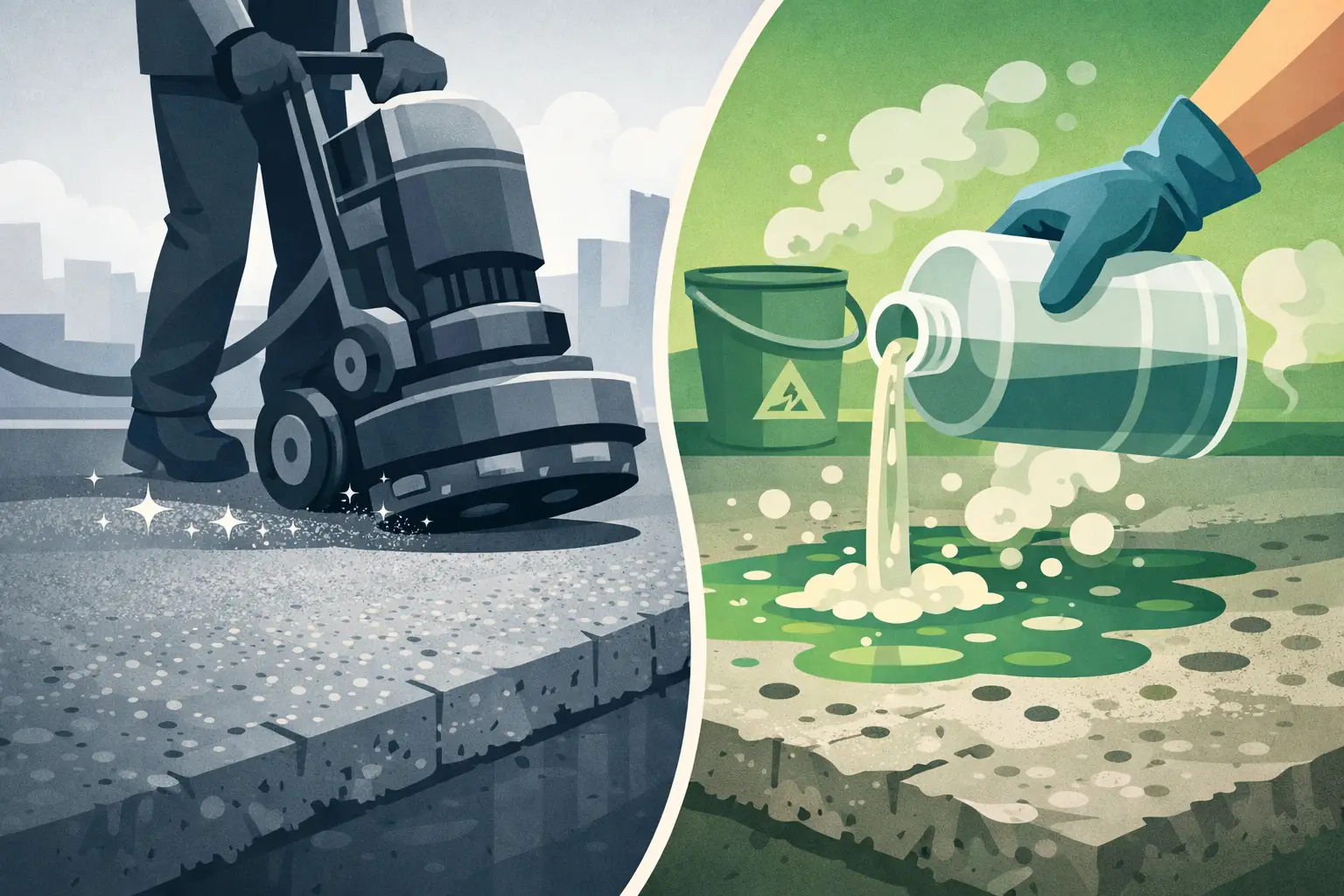
A garage floor can look clean and still be a poor candidate for epoxy. The difference often comes down to what is happening in the top layer of concrete. When comparing grinding versus acid etching concrete, the real question is not which method is cheaper or faster on paper. It is which method gives the coating a clean, sound, properly profiled surface to hold onto for years.
Epoxy coatings are only as durable as the concrete preparation underneath them. If the slab has sealers, old coatings, curing compounds, oil contamination, weak concrete paste, moisture concerns, or uneven areas, surface prep cannot be treated as an afterthought. For many residential and commercial floors, professional mechanical grinding is the more dependable starting point. Acid etching still has limited uses, but it is not a one-size-fits-all replacement for proper equipment and trained installation.
What Epoxy Needs From a Concrete Surface
Concrete may look solid, but its surface can be smooth, dusty, contaminated, or covered with materials that prevent epoxy from bonding. A coating needs a clean surface with a consistent texture, often called a concrete surface profile. That profile gives the epoxy something to mechanically grip.
The floor also needs to be structurally sound. Loose surface paste, failing paint, tire residue, oil, adhesives, and flaky concrete all need attention before a decorative flake system, quartz epoxy, metallic finish, or solid-color coating goes down. If those problems are coated over, they do not disappear. They become the weak link beneath the new floor.
This is why preparation matters so much in garages, workshops, warehouses, retail spaces, basements, and commercial work areas. A floor coating is not just paint. It is a system, and the slab is the foundation of that system.
Grinding Versus Acid Etching Concrete: The Core Difference
Concrete grinding is a mechanical process. Professional installers use diamond tooling on heavy-duty grinders to remove weak surface material and create an even profile. With the right equipment, grinding can also remove many sealers, old coatings, adhesives, surface contamination, and minor high spots. HEPA dust collection keeps the work area far cleaner than the old idea of uncontrolled concrete dust.
Acid etching is a chemical process. A diluted acid solution reacts with the concrete surface and lightly opens its pores. After the reaction, the floor must be thoroughly rinsed and neutralized. The goal is to create a rougher surface for coating adhesion.
Both methods aim to improve adhesion, but they do not solve the same problems. Acid etching can only react with exposed, clean concrete. It cannot reliably cut through sealers, remove old coatings, flatten uneven areas, or correct a weak concrete surface. Grinding can address many of those conditions while producing a more consistent profile.
When Acid Etching May Be Appropriate
Acid etching can be considered on a clean, unsealed, sound concrete slab with no previous coating and no significant oil or grease contamination. In a limited situation, it may provide enough profile for a specific coating system when the manufacturer permits it.
Even then, the work has to be done carefully. The acid concentration, dwell time, rinse process, neutralization, and drying time all matter. A floor that is not properly rinsed can retain residue that interferes with adhesion. A slab that is coated before it is dry can trap moisture below the system.
Acid etching may appeal to a homeowner because the materials seem inexpensive and the process appears straightforward. The risk is that concrete conditions are rarely as simple as they look. A garage floor can have invisible sealers, vehicle fluids, curing compounds, or dense machine-troweled areas that keep the acid from working evenly.
Acid also creates a wastewater issue. The rinse water must be handled responsibly, and the process can be messy around walls, drains, landscaping, and finished spaces. For occupied commercial buildings or interior projects where cleanliness matters, that is a serious practical drawback.
Why Mechanical Grinding Is Usually the Better Choice
Grinding gives installers direct control over the surface. Diamond tooling can open dense concrete, remove the weak top layer, and create a profile matched to the coating system being installed. Instead of hoping an acid reaction reaches every area evenly, the installer can see the result as the floor is prepared.
It is also more versatile. Grinding is often the right solution when a floor has existing paint or epoxy, patchy sealer, glue residue, tire marks, minor surface defects, or uneven texture. If a concrete floor needs flattening, leveling work, crack repair, or coating removal, acid etching does not have the capability to handle those issues.
Professional grinding also avoids introducing water and acid onto the slab. That can simplify scheduling, particularly where moisture is already a concern. Concrete moisture must be evaluated before coating, especially in basements, older slabs, and commercial spaces with changing conditions. A moisture barrier or another appropriate mitigation step may be needed before epoxy installation. Grinding does not eliminate moisture problems, but it does not add a wet chemical process to the preparation plan.
The trade-off is cost and equipment. Proper grinding requires commercial-grade machines, diamond tooling, dust collection, and trained operators. It is more involved than applying etching solution from a bucket. But the value is in the finish’s long-term performance. Saving money on prep only makes sense if the coating stays bonded. If it peels, delaminates, or fails early, the repair costs can quickly exceed the cost of doing the prep correctly the first time.
Surface Conditions That Change the Decision
The right preparation method depends on the slab, not just the type of epoxy selected. A newly poured concrete floor may need adequate cure time before any coating work begins. A smooth, dense slab may need more aggressive mechanical profiling. A floor with oil saturation may require specialized cleaning, degreasing, and possibly deeper removal of affected concrete.
Older garage floors often have more than one issue at once: tire residue near the overhead door, thin paint around the edges, spalling in traffic areas, and uneven patches from past repairs. In that case, acid etching is unlikely to produce a uniform surface. Grinding allows the installer to remove inconsistent material and prepare the full floor as one system.
Commercial projects deserve the same careful review. A warehouse, showroom, restaurant back room, automotive shop, or retail workspace may have coatings, traffic wear, floor hardeners, adhesive residue, or moisture exposure that is not obvious during a quick walkthrough. The preparation method should be based on an evaluation of the actual concrete, the intended use of the space, and the coating manufacturer’s requirements.
What Professional Preparation Looks Like
A dependable epoxy installation starts before the first coating is mixed. The floor should be inspected for cracks, damage, contamination, moisture concerns, previous treatments, and changes in elevation. From there, the installer can determine whether grinding, repair, leveling, moisture mitigation, or another step is necessary.
After mechanical preparation, the floor should be clean and free of loose debris. Cracks and joints may be addressed according to the system and the movement expected in the slab. The coating is then installed within the required preparation window so the surface remains clean and ready for adhesion.
At Prime Epoxy Coatings, we take this stage seriously because it is where coating performance is decided. Heavy-duty grinding equipment, HEPA dust collectors, professional-grade materials, and trained installers are not extras. They are part of doing the work right for homeowners and businesses that expect a floor to hold up.
Do Not Choose Prep Based on Price Alone
Acid etching can look like the budget option, but a low upfront number does not always equal a lower project cost. If etching fails to remove a sealer or leaves the profile inconsistent, the coating may bond unevenly. That can lead to peeling, hot-tire pickup, bubbling, or premature wear.
Grinding costs more because it is a more capable process. It takes the right machinery, diamond tools, dust control, and labor. For floors receiving epoxy in demanding spaces, that investment is often what separates a durable finished surface from a cosmetic upgrade that does not last.
If you are planning an epoxy floor, start with an honest look at the concrete beneath it. A free on-site estimate can identify whether your slab is a simple preparation job or whether it needs grinding, repair, leveling, or moisture control before the coating system is selected. The right floor begins with the right surface, and that decision should be made before color flakes or finish options ever enter the conversation.
Leave a Reply