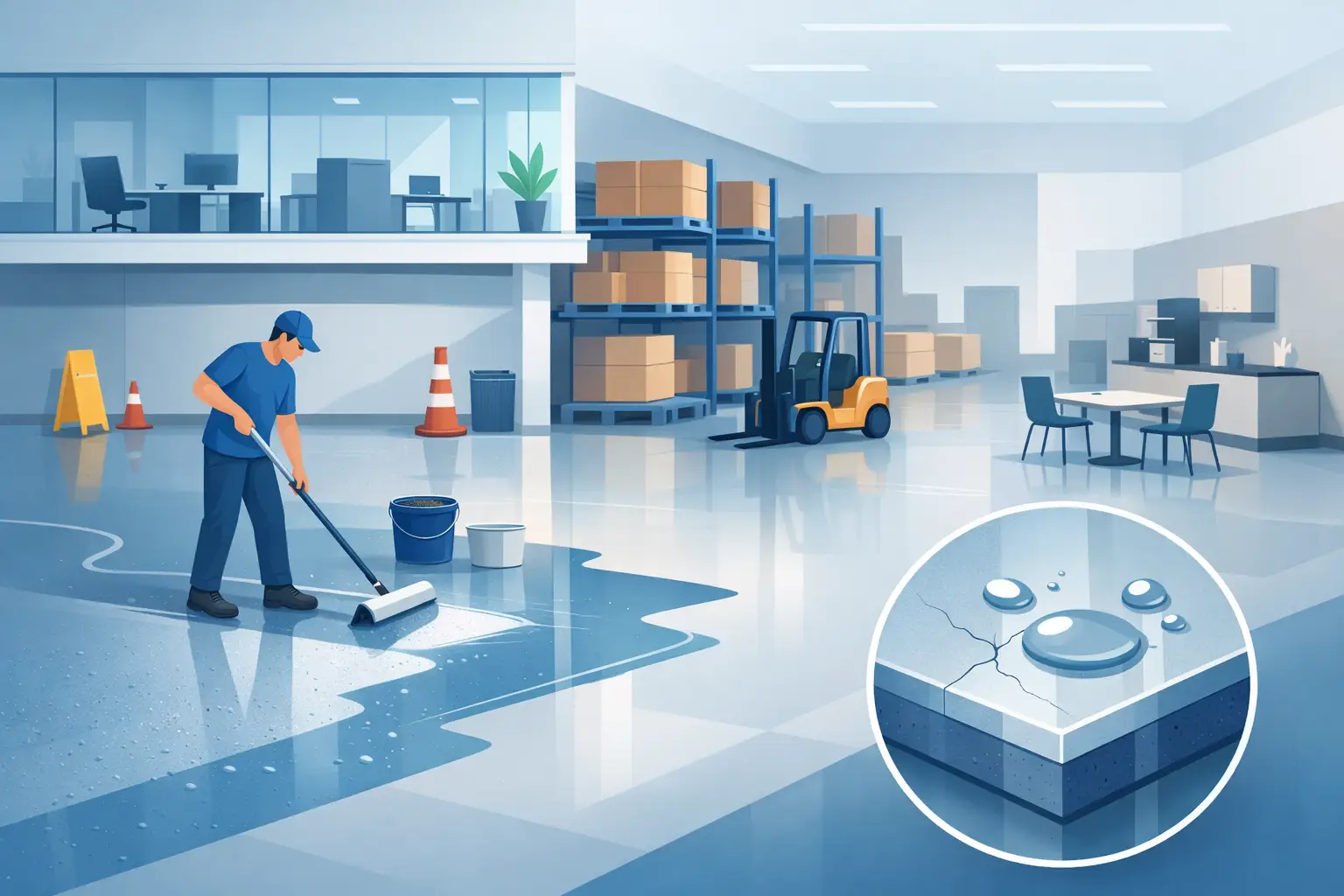
A commercial floor does more than cover concrete. It carries forklifts, carts, foot traffic, dropped tools, cleaning chemicals, oil, and the day-to-day abuse that comes with running a business. Commercial epoxy flooring gives that concrete a hard, cleanable protective surface, but only when the system is matched to the space and installed on a properly prepared slab.
For warehouses, retail spaces, automotive shops, restaurants, medical offices, production areas, and busy workspaces, the goal is not simply a floor that looks better on opening day. The goal is a floor that stays serviceable, cleans up easily, and holds its finish after real work begins.
What Commercial Epoxy Flooring Is Built to Do
Epoxy flooring is a resinous coating system applied over prepared concrete. Once cured, it forms a bonded surface that can improve stain resistance, abrasion resistance, appearance, and routine maintenance. Depending on the system, it can also add texture for traction, color coding for safety, and a brighter finish that helps a workspace feel cleaner and more organized.
That does not mean every epoxy floor is the same. A front-of-house retail floor has different demands than a service bay. A warehouse aisle with rolling loads needs a different approach than a small office or showroom. The right coating thickness, texture, topcoat, color, and preparation method depend on how the space is used.
A decorative flake system may be an excellent fit for a showroom, break room, retail area, or automotive workspace where appearance matters alongside durability. Quartz granular epoxy is often a strong choice where more texture and heavy-duty performance are needed. Solid-color systems create a clean, professional look for many commercial settings, while metallic finishes are better suited to spaces where a distinctive visual statement is part of the design.
The Concrete Decides Whether the Coating Lasts
The coating gets the attention, but the concrete underneath determines the outcome. Epoxy cannot correct every slab problem by itself. If the surface is weak, contaminated, uneven, damp, or covered in old adhesives and failed coatings, those conditions must be addressed before a new system goes down.
Proper mechanical preparation creates the surface profile epoxy needs to bond. This is why professional grinding matters. Heavy-duty grinding equipment removes weak concrete at the surface, opens the pores of the slab, and helps eliminate contaminants that can interfere with adhesion. It also gives installers a clear view of cracks, spalls, low areas, and other conditions that need repair.
Dust control matters, too. Concrete grinding produces fine dust that can move through an occupied building quickly. HEPA dust collection helps control that dust during preparation, protecting the work area and allowing the installation team to work toward a cleaner surface. Cutting corners on preparation may save a little time at the start, but it can lead to peeling, bubbling, delamination, and costly repairs later.
Moisture Is Not a Detail to Ignore
Concrete can hold and transmit moisture even when it looks dry on the surface. Moisture vapor moving through a slab can affect how a coating bonds and cures. That is why an experienced contractor evaluates the slab before recommending a system.
In some situations, a moisture barrier or vapor-mitigation primer may be necessary. In others, the issue may be drainage, a damaged vapor barrier below the slab, or water entering from exterior conditions. There is no one-size-fits-all answer. The correct approach starts with understanding the condition of the concrete rather than applying a coating and hoping for the best.
Match the System to the Work
The most durable commercial epoxy flooring is not necessarily the thickest or most expensive option. It is the system designed for the specific traffic, exposure, maintenance routine, and appearance requirements of the property.
For example, an automotive shop may need protection from oil, grease, road salt, tire traffic, and dropped equipment. A textured broadcast finish can help improve footing while still providing a surface that is easier to clean than bare concrete. The texture needs to be chosen carefully, though. More texture can improve traction, but an overly aggressive finish may hold dirt and require more effort to mop.
A retail store or office may place more emphasis on a polished appearance and easy daily cleaning. A flake or solid-color system can create a finished look that stands up better to traffic than painted concrete. In food service, healthcare, or commercial restroom areas, cleanability and moisture resistance may take priority, along with the need for slip resistance in wet zones.
Warehouses and production areas require an honest look at loads and operations. Forklifts, pallet jacks, steel-wheeled carts, impact, and repeated turning can be demanding on any floor. Epoxy can provide excellent protection, but severe industrial use may call for a specialized resinous system, additional thickness, repairs to damaged concrete, or a topcoat selected for better wear and chemical resistance.
Plan for Repairs, Leveling, and Downtime
Commercial projects often involve more than applying a coating. Cracks, pitted concrete, failed patches, joint damage, and low spots can affect both appearance and performance. Those repairs should be handled before the finish coat is installed, not hidden beneath it.
Concrete leveling or surface flattening can also make a major difference in spaces with rolling traffic, shelving, equipment, or customer access. A floor may look acceptable until carts pull to one side, doors drag, or water repeatedly settles in the same low area. Correcting those issues early helps the finished system perform as intended.
Downtime is another practical consideration. Businesses need to know when areas will be unavailable and when they can return to service. Cure times vary based on the materials used, slab conditions, temperature, humidity, and the type of traffic expected. Foot traffic may be allowed before heavy equipment traffic. A professional installer should explain the schedule clearly so the project can be planned around deliveries, employees, customers, and operations.
What a Professional Installation Should Include
A commercial coating project should begin with a conversation about how the floor is actually used. That includes traffic patterns, chemical exposure, current slab condition, drainage, cleaning practices, and the look the owner wants to achieve. A good recommendation is based on those facts, not just on a color sample.
The installation process typically includes evaluating the slab, mechanically preparing the concrete, repairing surface defects, addressing moisture concerns where needed, applying the selected coating system, and allowing appropriate cure time. The materials matter, but installer training and process control matter just as much. A premium coating applied to poorly prepared concrete is still a poor investment.
Prime Epoxy Coatings approaches commercial floors with that full-system mindset. Professional-grade XPS Coatings materials, trained installers, heavy-duty grinding equipment, and HEPA dust collection all support the same purpose: creating a surface the coating can properly bond to and a finish built for the demands of the space.
Keep the Floor Working After Installation
Epoxy floors are easier to maintain than bare concrete, but they are not maintenance-free. Routine sweeping keeps grit from acting like sandpaper under foot and vehicle traffic. Promptly cleaning spills reduces staining risk and helps keep textured surfaces from collecting buildup. Use cleaning products appropriate for the coating system, and avoid harsh methods that can dull or damage the finish.
Entry mats can reduce tracked-in water, salt, and abrasive dirt. In areas with rolling equipment, inspect wheels and casters regularly. Hard or damaged wheels can wear any finished floor faster. If the operation changes later – heavier equipment, new chemicals, different traffic patterns – reassess whether the floor protection still matches the work.
A commercial floor should make the workday easier, not become another recurring repair problem. Start with an honest assessment of the concrete, choose a system that fits the operation, and give preparation the attention it deserves. A free estimate is a practical first step toward a floor that looks professional and is ready to earn its keep.
Leave a Reply