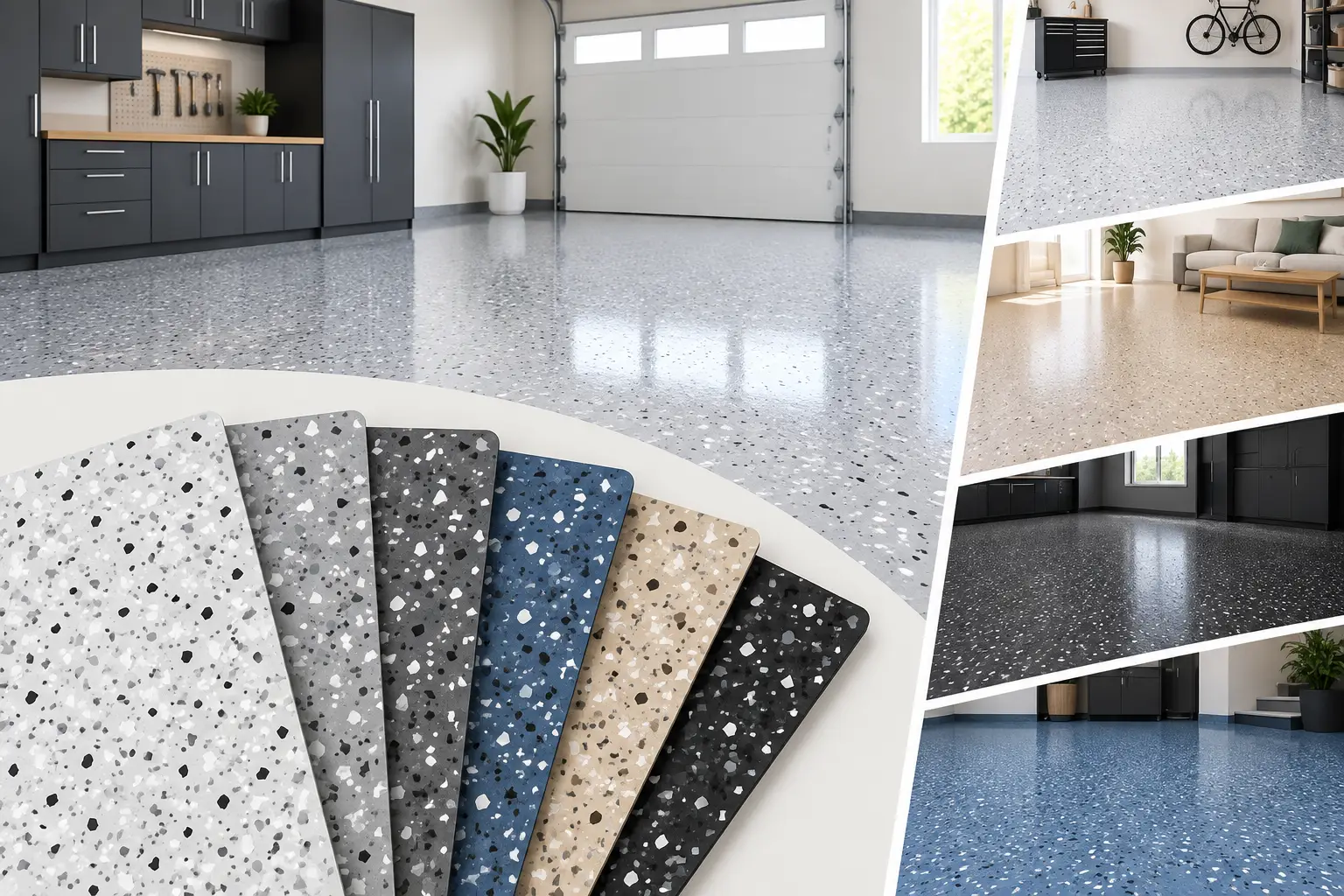
A garage floor can look clean on a sample board and completely different once it is surrounded by red toolboxes, dark cabinets, natural light, and a daily layer of road dust. That is why choosing flake epoxy flooring colors is more than picking a shade you like. The right blend needs to work with the room, the amount of traffic, and the level of maintenance you expect from the floor.
Flake systems offer more visual range than many property owners realize. They can make a worn concrete slab look brighter, more uniform, and easier to live with while still providing the durable, cleanable surface people want in garages, basements, shops, retail spaces, and work areas. The best choice starts with how the space will actually be used.
What Creates the Color in a Flake Floor
A flake epoxy floor is built in layers. After the concrete is properly prepared, a pigmented base coat is applied and decorative vinyl flakes are broadcast into it. A clear protective topcoat locks the flakes in place and gives the finished floor its sheen and wear resistance.
The base coat matters, but the flake blend does most of the visual work. Each blend uses a mix of colored chips, often with light, medium, and dark tones. From a few feet away, the chips read as one overall color. Up close, they create the patterned, textured appearance that helps disguise dust, minor debris, and everyday marks better than a solid-color coating.
Color can also look different based on the topcoat. A glossier finish reflects more light and can make a floor appear sharper and richer. A lower-sheen option may better suit spaces where reduced glare is preferred. The same blend can feel different in a sunlit garage than it does in a basement with overhead LED lighting.
Choosing Flake Epoxy Flooring Colors by Room Use
There is no single best color blend for every slab. A homeowner may want a bright, polished garage that feels like an extension of the house. A facility manager may need a neutral floor that stays presentable between cleanings. A workshop owner may be more concerned with hiding tire marks and tracked-in dirt.
Garages and Automotive Workspaces
Medium gray, charcoal, tan, and black-and-white blends remain practical choices for garages. They work with most wall colors, cabinets, vehicles, and storage systems without making the room feel busy. Medium-tone blends are especially forgiving because they do not show every footprint like a very light floor or every bit of dust like a nearly black floor.
For automotive spaces, consider what comes in on tires. Road grime, salt residue, leaves, and shop dust are part of normal use in East Central Indiana and Southwest Ohio. A patterned gray or earth-tone blend can keep the floor looking more consistent between cleanings. That does not mean the floor will never need attention, but the visual texture is far more forgiving than plain gray paint on concrete.
Basements, Laundry Rooms, and Interior Living Areas
Lighter gray, soft beige, white-and-gray, or warm neutral blends can make below-grade spaces feel brighter. This is often a good fit for finished basements, laundry rooms, mudrooms, and utility areas where homeowners want a clean finished appearance without the upkeep concerns of carpet.
There is a trade-off. Very light blends can show dark scuffs, pet hair, and soil more quickly. They are a strong choice where cleanliness and brightness are the priority, but a medium-light blend usually offers a better balance for an active household.
Retail, Showrooms, and Customer-Facing Areas
Commercial flooring should support the business, not distract from it. Neutral flake blends often work best in storefronts, lobbies, salons, service counters, and showrooms because they complement changing displays and signage. Gray blends typically look professional and modern, while warmer tan blends can make a customer-facing space feel less industrial.
If brand colors are part of the interior design, it may be tempting to make the floor match exactly. That can work in limited areas, but it is worth considering long-term flexibility. A neutral flake floor stays relevant through repainting, rebranding, and fixture changes. For most businesses, the floor should be a durable backdrop rather than the loudest feature in the room.
Warehouses, Shops, and Work Areas
For high-use work environments, darker or medium-value blends are often the practical call. They can help mask scuffs, dirt, and incidental marks while still giving the concrete a finished appearance. Color should not be used to hide a surface problem, though. If the slab has cracks, low spots, contamination, or moisture concerns, those conditions need to be addressed before any coating goes down.
Let Lighting Make the Final Call
Lighting changes color more than most people expect. A blend that looks silver-gray under showroom lighting may take on a warmer or darker appearance under residential fixtures. Natural daylight adds another variable, especially in garages with windows or doors that stay open during the day.
Before settling on a color, look at physical samples in the actual space whenever possible. Set them on the floor near walls, cabinets, doors, and equipment. View them in morning light, afternoon light, and after dark with the lights you normally use. A sample held at eye level does not tell the same story as a sample placed flat on the concrete.
Also consider the color of surrounding surfaces. White drywall can make a charcoal blend look crisp and clean. Wood cabinets may bring out warmer tones in a tan or brown blend. Brick, painted block walls, and metal storage systems can all shift how the floor reads. The goal is not to match every surface exactly. It is to choose a floor color that belongs in the space.
Practical Color Choices and Their Trade-Offs
Light-colored flake blends make rooms feel open and bright. They are useful for smaller garages, basements, and commercial interiors where visibility matters. Their downside is simple: dark debris and tire marks are easier to see.
Dark blends create contrast and can suit modern garages, workshops, and bold commercial interiors. They hide some stains well but can show dust, dried salt, and light-colored debris. They may also make a small room feel tighter if the walls and ceiling are dark.
Medium gray blends are popular because they sit in the middle. They coordinate with nearly anything, handle daily use well, and do not demand constant cleaning to look presentable. They are not the only answer, but they are a dependable one for many garages and workspaces.
Earth-tone blends bring warmth to concrete and pair well with wood, brick, and traditional home finishes. They can be especially effective in basements, covered patios, and spaces where a cool industrial gray would feel out of place. The key is choosing a blend with enough contrast to keep the floor from looking flat or muddy.
High-contrast blends with white, black, and multiple accent colors create a more decorative look. They can make a garage or showroom floor stand out, and the pattern does a good job of disguising random dirt. In a large commercial area, however, a highly varied blend may feel visually busy. Scale matters.
Color Will Not Fix Poor Concrete Preparation
A good-looking flake system depends on what happens before color is ever applied. Concrete needs to be properly evaluated, mechanically ground, repaired where needed, and cleaned so the coating can bond to a sound surface. Moisture conditions must also be considered, particularly on basement slabs and concrete with a history of dampness.
Skipping this work can lead to peeling, bubbling, or coating failure regardless of how attractive the flake blend looked on day one. Proper grinding also creates the surface profile needed for the coating system to grip the slab. This is why professional equipment, HEPA dust collection, and trained installation matter. Decorative flakes are the finish people see, but surface preparation is the foundation that keeps it there.
At Prime Epoxy Coatings, color selection is part of the larger project conversation. The condition of the concrete, room use, lighting, and desired look should all be considered before recommending a system. A free estimate is a chance to look at the actual slab instead of making a decision from a photo alone.
A Simple Way to Narrow Down Your Options
Start by deciding whether the space needs to feel brighter, warmer, more industrial, or more polished. Then think about the mess it sees on a normal week, not its best day. A garage used for daily parking needs a different level of forgiveness than a basement lounge or a retail sales floor.
Next, choose a general color family that works with the walls and permanent fixtures. From there, compare a few blend samples under the room’s real lighting. Most people do not need twenty choices. Once the practical requirements are clear, two or three samples usually make the right direction obvious.
The best floor color is the one that still looks right after the first winter, the first busy workweek, and the first round of tire marks. Choose a blend that fits the work your space does, then make sure the concrete underneath is prepared to carry that finish for the long haul.
Leave a Reply