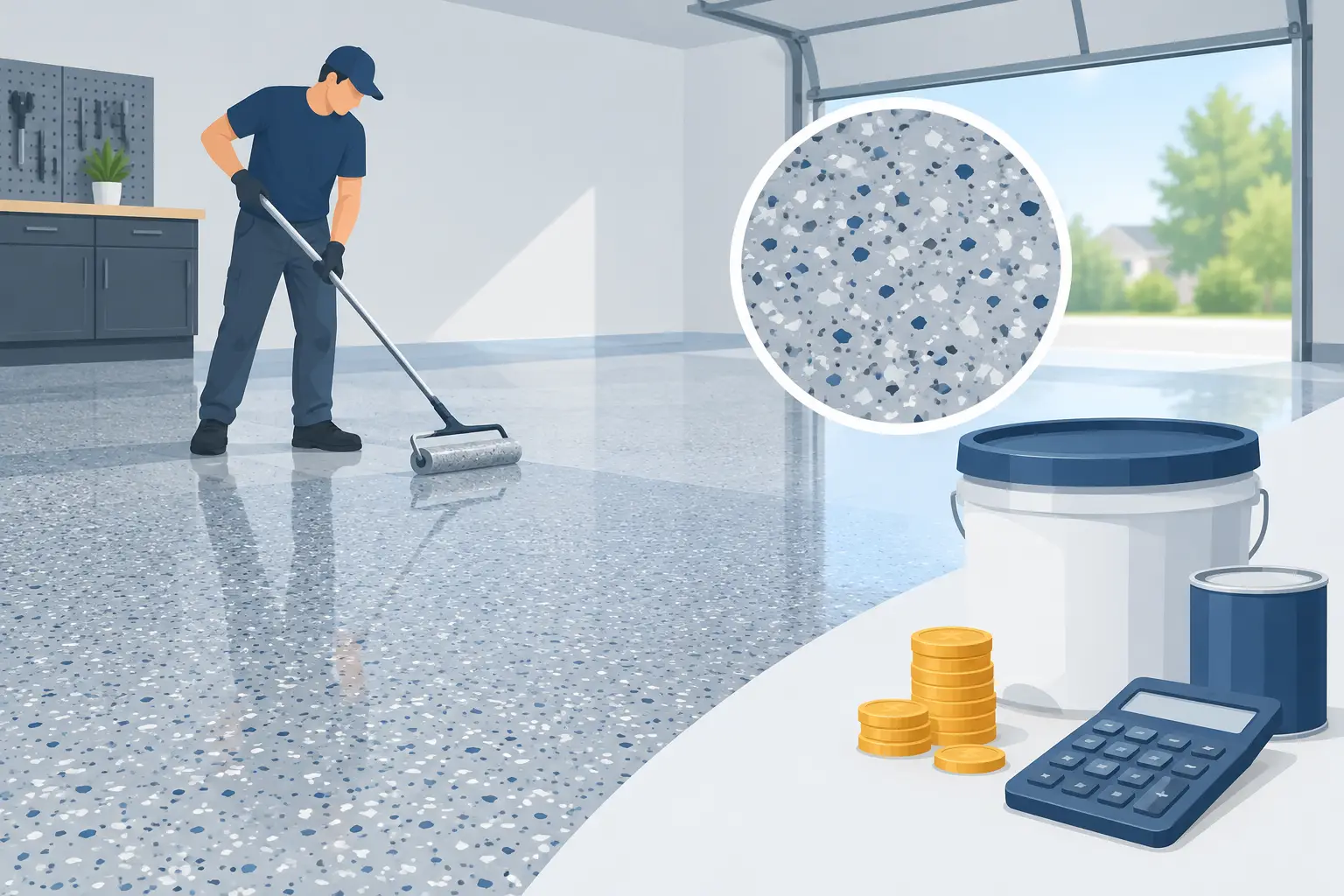
A quartz epoxy floor cost is not determined by color chips in a showroom or a quick square-foot measurement alone. The real price is shaped by what is happening underneath the floor: the condition of the concrete, moisture levels, needed repairs, access to the space, and the coating system built for the job.
Quartz systems are a serious flooring option for garages, workshops, retail spaces, commercial kitchens, corridors, restrooms, and other areas that need a cleanable, durable surface with more grip than a smooth coating. They can also be a smart investment in a home where a plain concrete floor has become dusty, stained, or difficult to maintain. But a long-lasting floor takes more than rolling material over concrete.
Typical Quartz Epoxy Floor Cost Per Square Foot
For professionally installed quartz epoxy flooring, many projects fall roughly between $8 and $18 per square foot. Smaller residential projects, extensive concrete repairs, moisture-control work, custom details, and higher-build systems can push the price higher. Large, open commercial spaces with sound concrete and efficient access may come in lower per square foot.
That range is useful for early budgeting, but it is not a substitute for an on-site estimate. A 500-square-foot garage and a 500-square-foot commercial restroom may have the same floor area, yet require very different labor, materials, preparation, and scheduling.
Quartz epoxy is typically installed as a broadcast system. Epoxy resin is applied to a properly prepared concrete surface, colored quartz aggregate is broadcast into the wet material, excess aggregate is removed after cure, and one or more protective topcoats are installed. The result is a textured decorative floor with strong wear resistance and better traction than many smooth epoxy finishes.
What Changes Quartz Epoxy Floor Cost?
Concrete preparation is usually the biggest factor
Concrete preparation is where good coating work begins. Existing floors may have old paint, failed coatings, oil contamination, adhesive residue, laitance, rough patches, or a weak surface that needs to be removed before new material can bond correctly.
Professional diamond grinding creates the proper surface profile for the coating system. It is not the same as a light cleaning or a quick pass with rental equipment. Heavy-duty grinders and HEPA dust collection help control dust while opening the concrete evenly. That preparation takes time, equipment, and trained labor, but skipping it is one of the fastest ways to shorten the life of a floor.
A floor that is clean, sound, and already properly profiled will generally cost less to coat than a floor with years of contamination or failed material on it. Low bids often leave out this part of the job, then turn into change orders later or produce a coating that does not hold up.
Cracks, spalls, and uneven concrete add labor
Most concrete has cracks. Some are minor and can be filled as part of normal preparation. Others may be moving, wide, deep, or connected to settlement issues. Those conditions require a closer look before any coating is installed.
Spalled areas, pitting, chipped edges, and damaged expansion joints can also affect the final price. Repair materials must be selected and installed correctly, then ground smooth so the decorative quartz system has a consistent base. If the floor needs flattening or leveling before coating, that work should be included clearly in the estimate rather than treated as an afterthought.
Quartz is forgiving visually compared with a solid-color coating, but it cannot make serious concrete defects disappear without proper repair.
Moisture can require a barrier system
Concrete is porous, and moisture vapor can move through it from below. This is especially common in basements, older slabs, floors without an effective vapor barrier, and buildings with changing humidity conditions. If moisture is not addressed when needed, it can create pressure beneath a coating and lead to blistering, delamination, or premature failure.
Moisture testing and a moisture-mitigation primer add cost, but they protect the larger investment. The right answer depends on the slab and the system being installed. Not every floor needs a moisture barrier, but every floor deserves an installer who checks for the risk instead of assuming the concrete is dry.
System thickness and topcoat selection matter
Not all quartz epoxy floors are built the same way. A light quartz broadcast for a residential utility area is different from a full-broadcast, high-build system intended for steady commercial traffic. The amount of resin, quartz aggregate, and protective topcoat directly affects material cost and floor performance.
Topcoats also matter. A quality urethane or polyaspartic topcoat can improve chemical resistance, abrasion resistance, cleanability, and UV stability. In a commercial setting, the right topcoat can be the difference between a floor that stays serviceable and one that wears prematurely in traffic lanes, at entrances, or around equipment.
The best system is not always the thickest or the most expensive. It is the one matched to how the space is actually used. A homeowner parking two vehicles has different needs than a maintenance shop handling oils, rolling loads, and daily foot traffic.
Size, layout, and access affect the price
Square footage matters, but layout matters too. A large rectangular floor with open access is more efficient to prepare and coat than several small rooms, tight hallways, closets, floor drains, equipment bases, and detailed edges. Stairs, cove bases, vertical surfaces, and areas that must remain operational during installation can increase labor.
Smaller jobs often have a higher price per square foot because mobilization, surface preparation equipment, and coating setup are still required. Commercial jobs may also need after-hours work, phased installation, special safety requirements, or coordination around inventory and equipment. Those details should be discussed before the project starts.
Quartz Flooring Versus Other Epoxy Options
Quartz epoxy costs more than some basic paint-like coatings, but it brings advantages where traction and durability matter. The aggregate creates a textured surface that can help in wet or active work areas. Its multi-color finish also does a good job hiding dirt, minor scuffs, and day-to-day wear.
Flake epoxy is often a popular choice for garages and residential spaces because it offers a decorative finish with a different look and feel. Metallic epoxy creates a bold, custom appearance but is generally better suited for controlled interior spaces where visual impact is the priority. Solid-color epoxy can be a practical option for utility rooms, industrial areas, or customers who want a clean, simple finish.
The right choice depends on the room, expected traffic, cleaning routine, and budget. For a space that sees moisture, foot traffic, carts, tools, or frequent use, quartz can be a particularly practical fit.
How to Compare Quartz Epoxy Estimates
Do not compare estimates by the bottom number alone. Ask what concrete preparation is included, whether crack and spall repairs are covered, how moisture concerns will be handled, and what coating and topcoat products are being installed. You should also know whether the quoted system is a light broadcast or a full broadcast, and whether the stated price includes final cleanup and return-to-service expectations.
A clear estimate should describe the work in plain language. It should not leave you guessing whether grinding, repairs, moisture mitigation, or protective topcoats will become added costs once the work is underway.
At Prime Epoxy Coatings, the focus starts with the slab itself. Professional-grade materials, trained installers, heavy-duty grinding equipment, and HEPA dust collection are part of building a floor that has a real chance to perform for years, not just look good on installation day.
Budget for the Floor You Actually Need
A quartz epoxy floor is a finish you live and work on every day. It should be easy to clean, suited to the traffic in the space, and installed over concrete that has been properly prepared. Spending less on the front end can make sense when the slab is in excellent shape and the use is light. It does not make sense when lower cost means bypassing repairs, moisture control, or the preparation needed for adhesion.
The most useful next step is a free on-site estimate that looks beyond square footage. Have the concrete evaluated, explain how the space is used, and ask for a system built for that job. A well-prepared quartz floor is not just a cosmetic upgrade – it is a hardworking surface that should earn its place in the building.
Leave a Reply