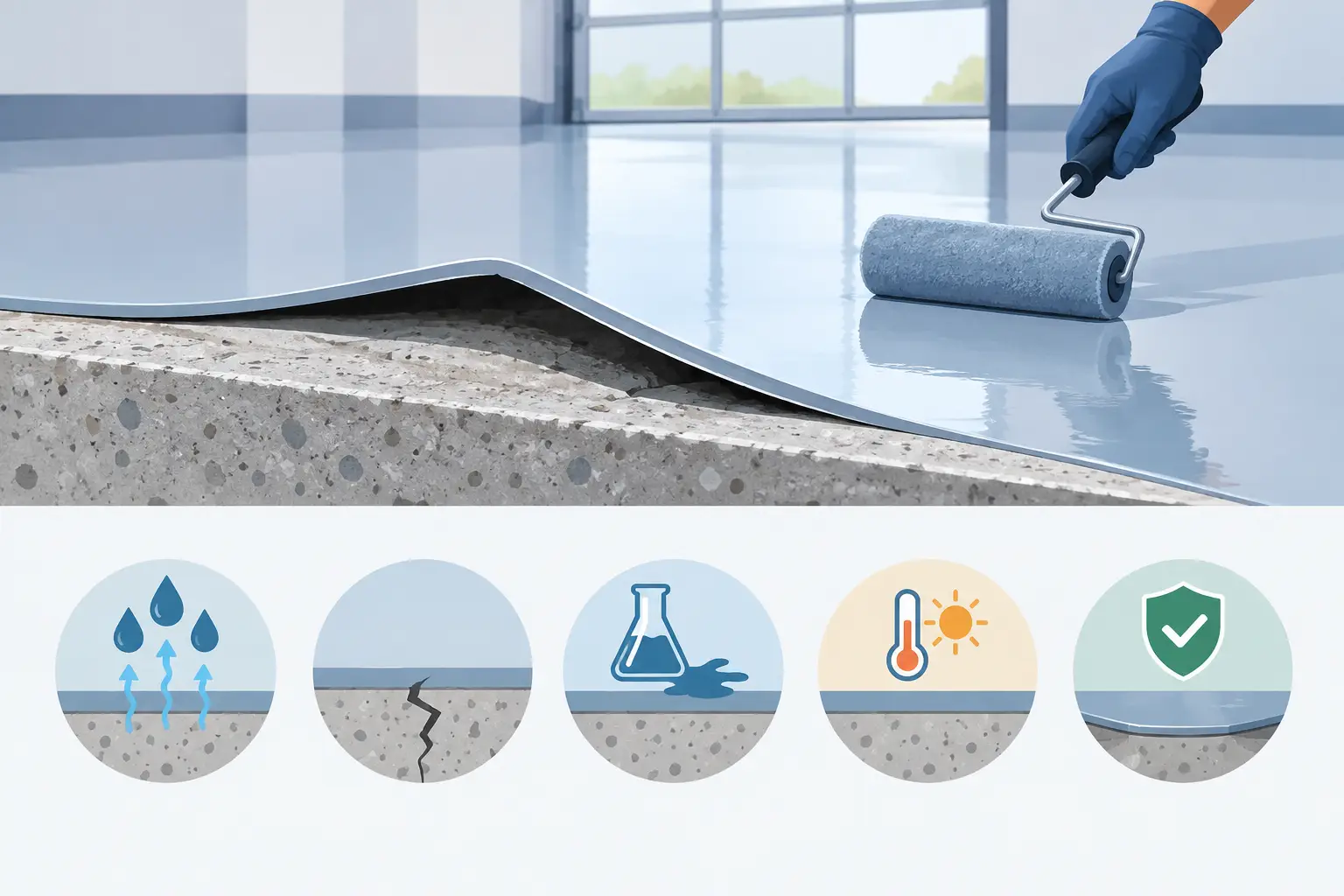
A coating can look great on installation day and still fail months later if the concrete beneath it was not ready. Epoxy delamination causes usually start below the surface: moisture moving through the slab, weak concrete paste, oil contamination, or a coating system applied without the right profile. When epoxy loses its bond, it can peel, blister, chip, or come up in sheets. That is not a cosmetic issue. It is a preparation issue that needs to be addressed before another coating goes down.
For garages, workshops, retail spaces, basements, and commercial floors, the answer is rarely to coat over the failed area and hope for the best. A long-lasting resinous floor begins with finding out why the first bond failed.
What Does Epoxy Delamination Look Like?
Delamination means the epoxy has separated from the concrete or from a previous coating layer. You may notice hollow-sounding spots when you tap the floor, edges that lift near cracks or joints, bubbling, flaking, or broad sections that release when moved with a scraper.
The pattern can offer useful clues. Failure in a few high-traffic lanes may point to impact or wear, while random blisters across the floor often raise moisture concerns. Peeling around a workbench, vehicle parking area, or doorway can indicate oil, road salt, or poor adhesion at the concrete surface. Still, appearances only tell part of the story. The right repair starts with testing and preparation, not guessing.
The Main Epoxy Delamination Causes
Moisture Vapor Coming Through Concrete
Concrete is porous. Even a slab that looks dry can hold moisture or allow water vapor to move upward from the soil below. When vapor pressure builds under a low-permeability epoxy coating, it can weaken the bond and create blisters or bare spots.
This is especially common in basements, older slabs without an effective vapor barrier, floors with drainage issues, and buildings where humidity changes seasonally. A floor may also take on moisture after a plumbing leak, flooding event, or repeated snow and rain exposure near overhead doors.
Moisture is not always a reason to rule out an epoxy system. It does mean the installer must evaluate the slab and select the right moisture-mitigation approach when needed. Skipping that step can turn a good-looking installation into an expensive redo.
Inadequate Concrete Surface Preparation
Epoxy needs a clean, solid, textured concrete surface to grab. Smooth, machine-troweled concrete may look sound, but it often does not have enough profile for a high-build coating to bond properly. Weak surface paste, laitance, old curing compounds, paint, sealers, and dusty concrete all interfere with adhesion.
Acid washing is sometimes treated as a shortcut, but it does not solve every preparation problem. It may clean portions of the surface while leaving contaminants, inconsistent texture, or weak concrete behind. Professional mechanical grinding opens the concrete evenly and removes compromised material so the coating bonds to sound substrate.
This is why preparation is the foundation of the entire floor system. If epoxy is applied over a surface that is not properly profiled, even premium materials cannot perform as intended.
Oil, Grease, Silicone, and Other Contamination
Garage and shop floors see more than foot traffic. Motor oil, transmission fluid, grease, tire dressing, paint, cleaners, waxes, and silicone products can soak into concrete or leave residue on top. Some contaminants are obvious. Others are nearly invisible but still enough to prevent proper adhesion.
Degreasing is part of the process, but heavily contaminated concrete may require repeated treatment and deeper mechanical removal. Coating over a dark oil stain without addressing what is absorbed below the surface is a gamble. The epoxy can bond around the stain and later release where the concrete is weakest.
Commercial settings have their own contamination challenges. Food oils, industrial lubricants, cleaning chemicals, forklift residue, and prior maintenance products should all be considered before a coating system is specified.
Coating Applied Over a Failing Previous Layer
Not every epoxy floor is applied directly to bare concrete. Sometimes a new coating is placed over old paint, a failing sealer, a previous epoxy, or an unknown coating system. If the layer underneath is poorly bonded, the new finish is only as reliable as the old one.
Recoat work requires more than a quick scuff. The existing floor must be inspected for adhesion, cleaned thoroughly, and mechanically prepared to accept the next layer. Loose material needs to be removed completely. If there is any question about the integrity of the old coating, grinding back to sound concrete is often the better long-term choice.
Incorrect Mixing, Recoat Timing, or Installation Conditions
Epoxy is a chemical system, not just a can of paint. The resin and hardener must be mixed at the correct ratio and for the proper amount of time. Material applied after its working time has passed may not cure or bond correctly. Applying layers outside the recommended recoat window can also create intercoat adhesion issues.
Temperature and humidity matter as well. A cold slab can slow curing, while excessive heat can shorten working time. Condensation on concrete, high humidity, or rapid temperature swings can affect the installation. Every product has installation requirements, and the floor conditions need to match them.
These details are where trained installers make a difference. The goal is not simply to get material on the floor. The goal is to build a coating system that cures and bonds the way it was designed to.
Why Cracks and Concrete Movement Matter
Epoxy is durable, but concrete moves. Slabs expand, contract, settle, and crack over time. Control joints, expansion joints, and active cracks need to be handled differently from ordinary surface imperfections.
Filling every joint solid with a rigid material may look clean at first, but it can create problems when the slab moves. A proper plan considers whether a crack is dormant or active, whether a joint needs to remain flexible, and how the finished floor will be used. Heavy vehicle traffic, temperature swings, and commercial equipment all affect that decision.
Delamination near cracks does not always mean the epoxy product failed. It may mean the concrete movement exceeded what the coating could bridge. Good installers set realistic expectations and use repair materials suited to the condition of the slab.
How Professionals Prevent Delamination
The most dependable epoxy jobs follow a process, not a shortcut. Before coating begins, the concrete should be evaluated for moisture, contamination, existing coatings, cracks, surface hardness, and repair needs. That evaluation helps determine whether the floor needs grinding, leveling, patching, a moisture barrier, or a different coating approach.
Mechanical preparation is central to the process. Heavy-duty diamond grinding creates the right surface profile while HEPA dust collection helps control airborne dust in occupied homes and businesses. After grinding, the floor must be vacuumed and inspected carefully. Any remaining weak concrete, residue, or unaddressed damage can become a failure point.
Material selection comes next. A decorative flake epoxy, quartz system, solid-color finish, or metallic floor may have different build requirements and performance goals. A garage that sees hot tires and road salt has different needs than a retail showroom or a basement recreation room. The right system depends on the slab, the traffic, the environment, and the owner’s expectations.
At Prime Epoxy Coatings, that prep-first approach is not an add-on. It is the work that determines whether the finished floor is built to last.
Can a Delaminated Epoxy Floor Be Repaired?
Yes, but the repair must remove all failed material. Spot repairs can work when the problem is isolated and the surrounding coating is firmly bonded. The loose section is ground away, the concrete is prepared, repairs are completed, and a compatible coating is applied.
When failure is widespread, patching may only delay a larger problem. The better option is often to mechanically remove the compromised coating, diagnose the source of the failure, correct it, and install a new system over properly prepared concrete. This takes more work up front, but it prevents the same issue from showing up under a fresh topcoat.
A floor that is peeling, bubbling, or chipping is giving you useful information about the slab beneath it. Have the concrete evaluated before covering the evidence. The right preparation, moisture control, and coating system can turn a frustrating failure into a floor that is easier to clean, tougher under daily use, and worth the investment.
Leave a Reply