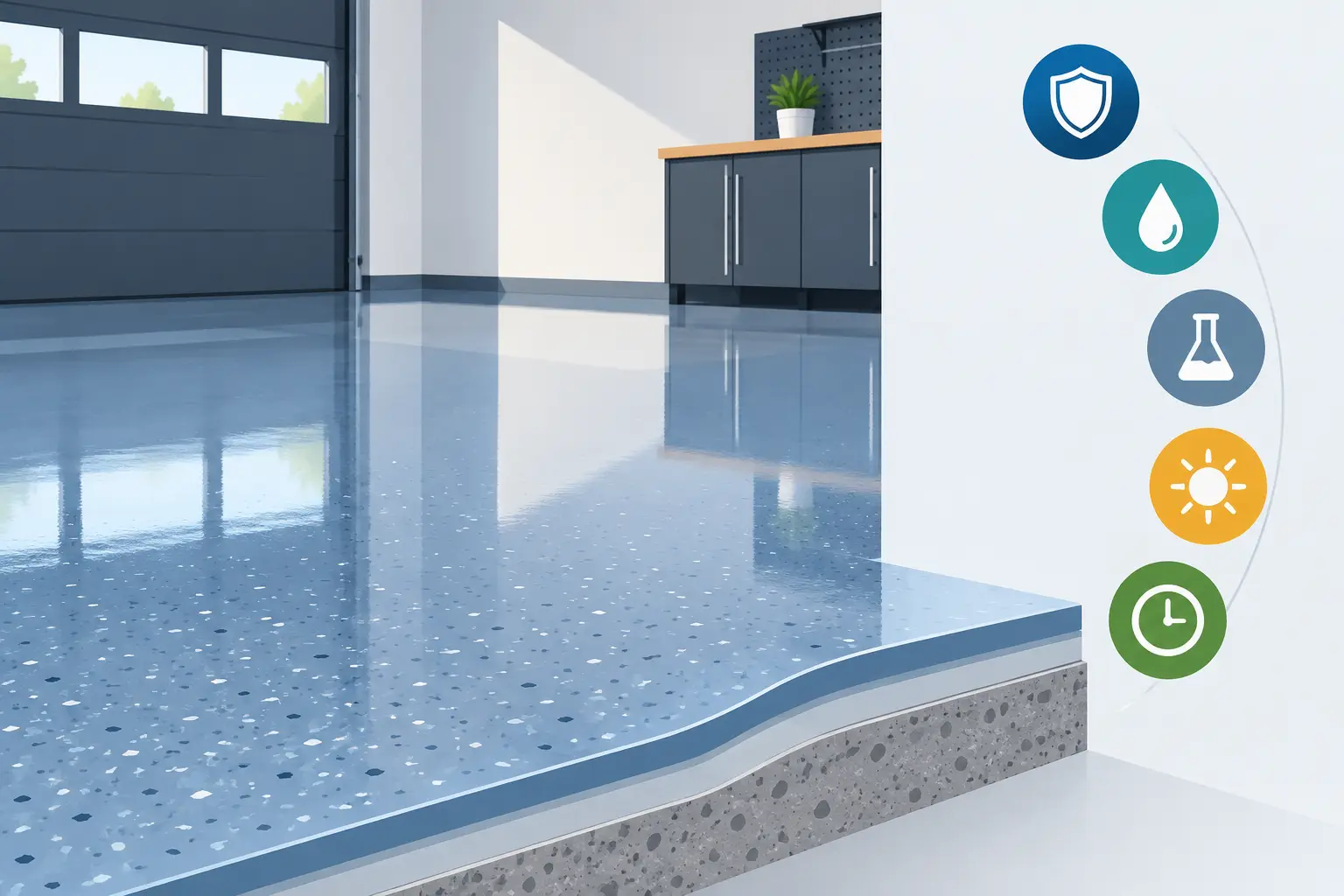
A garage floor can look clean on day one and start peeling within a year. A warehouse aisle can take daily traffic without trouble, then fail at one damp loading-door corner. The difference is rarely the color chips or topcoat sheen. With epoxy coatings, the work beneath the finish determines whether the floor performs like a professional system or a temporary cover-up.
Concrete is not a blank, dry slab waiting for paint. It is porous, it can hold moisture, and it collects years of oil, tire residue, curing compounds, old adhesives, and surface contaminants. A durable resinous floor begins by dealing with those conditions honestly.
Why Epoxy Coatings Perform So Well
Epoxy is a resin system that bonds to properly prepared concrete and creates a hard, continuous surface. That surface can make floors easier to clean, improve light reflectivity, reduce concrete dusting, and give a garage, showroom, shop, or workspace a finished appearance. Depending on the system selected, it can also provide resistance to chemicals, abrasion, hot tires, and regular foot or vehicle traffic.
That does not mean every epoxy floor is built for the same job. A residential garage sees different abuse than an auto service bay. A retail floor needs a clean, customer-facing finish, while a commercial kitchen, manufacturing area, or warehouse may need more attention to slip resistance, chemical exposure, and repairability. The right coating is based on how the space is used, not just on what looks good in a sample.
A professional installation also gives property owners more design options than a basic gray floor. Decorative flake systems offer texture and help hide everyday dust. Quartz granular epoxy creates a tougher, more textured finish suited to demanding commercial areas. Metallic finishes bring movement and depth to interior spaces, while solid-color systems deliver a clean, straightforward look. The same resinous materials can also be used for distinctive countertop finishes when the project calls for them.
Surface Preparation Is the Real Foundation
A coating can only bond as well as the concrete allows. If the surface is smooth, contaminated, weak, or damp, applying resin over it does not solve the problem. It can trap the problem beneath a glossy finish.
Proper preparation typically starts with evaluating the slab. Cracks, spalling, uneven areas, previous coatings, oil spots, and soft concrete all need attention before coating begins. Heavy-duty diamond grinding opens the concrete surface and creates the profile needed for mechanical adhesion. It also removes weak material that would otherwise become the failure point.
Grinding is not simply a matter of making the floor look rough. The installer needs to use the correct tooling, make enough passes, and keep the floor consistent from edge to edge. Areas around walls, posts, drains, and doorways deserve the same attention as the open field of the floor. Skipping those details may save time at installation, but it often shows up later as lifting, peeling, or uneven appearance.
Dust control matters, too. Professional HEPA dust collection keeps concrete dust from spreading through the property and allows the crew to see the actual slab condition while they work. For occupied homes, retail spaces, and facilities with nearby equipment or inventory, that is more than a convenience. It is part of doing the job cleanly and responsibly.
Some slabs also need crack repair, patching, flattening, or leveling before a coating system makes sense. Epoxy will follow the existing floor profile. It will not turn a low spot into a flat surface or make a damaged slab structurally sound. Addressing those issues first gives the finished floor a better appearance and a better chance of lasting.
Moisture Cannot Be Guessed
Moisture is one of the most common reasons floor coatings fail. Concrete can release vapor even when its surface looks completely dry. If moisture pressure is too high for the selected system, it can interfere with adhesion and cause blistering, bubbling, or delamination.
This is especially relevant for slabs on grade, basements, older buildings, and areas with drainage concerns. A moisture barrier or moisture-mitigation system may be needed before the coating is installed. That decision should come from the condition of the slab and the coating manufacturer’s requirements, not from a quick visual inspection.
There is no benefit to pretending every floor needs the same process. Some concrete is sound, dry, and ready for preparation and coating. Other slabs need more work before a durable finish is possible. A straightforward evaluation up front prevents expensive surprises after the floor is complete.
Choosing the Right Epoxy Coating System
The best system starts with a practical question: what happens on this floor every week? Homeowners may want a garage that handles road salt, lawn equipment, bicycles, storage cabinets, and parked vehicles. A business owner may need a floor that stays presentable under shopping carts, rolling equipment, or steady customer traffic. A facility manager may be focused on cleanability, safety, and reduced maintenance downtime.
Flake epoxy is a strong choice for many garages, basements, workshops, and commercial spaces because it combines visual coverage with a durable top surface. The flakes help disguise minor debris and create a finished look that is less industrial than plain gray concrete. Texture can be adjusted, which helps where extra traction is needed.
Quartz granular epoxy is often a better fit for spaces that need more aggressive traction and hard-working performance. It is commonly considered for commercial settings, shop floors, locker rooms, utility areas, and other places where the floor has to work as hard as the people using it.
Metallic epoxy is primarily a design-driven option. It can create a high-end, one-of-a-kind surface for interiors, showrooms, offices, finished basements, and countertops. Because each application moves differently, no two metallic floors look exactly alike. That is a benefit for customers who want character, but it also means expectations should be discussed clearly before installation.
Solid-color epoxy works well when consistency, clean lines, and easy maintenance matter most. It is a practical option for many commercial and industrial environments. A topcoat may be selected to improve wear resistance, UV stability, gloss level, or slip resistance based on the space.
Installation Timing and Everyday Care
A professional coating project moves through several steps: evaluation, repairs, grinding, cleaning, any required moisture treatment, base-coat application, decorative broadcast or build layers, and protective topcoats. Cure time depends on the product system, temperature, humidity, and the type of traffic the floor will receive. Walking on a floor and parking a vehicle on it are not the same milestone.
Property owners should plan ahead. Move vehicles, shelving, tools, inventory, and stored items out of the work area. If the floor is part of an active business, discuss access, operating hours, and traffic requirements before the project begins. Good scheduling protects the installation and reduces disruption.
After installation, routine care is simple but still matters. Sweep away abrasive grit, clean spills promptly, and use a soft brush or mop with a coating-safe cleaner. Avoid harsh products that leave residue or damage the finish. In winter, remove road salt and slush regularly rather than letting them sit on the surface for long periods.
A coated floor is durable, not indestructible. Dragging sharp metal, dropping heavy pointed objects, or exposing a system to chemicals outside its intended use can damage any finish. The advantage is that a properly installed system is far easier to maintain and refresh than bare, stained, dusting concrete.
Work With a Contractor Who Starts Below the Surface
When comparing epoxy contractors, ask how they prepare concrete, how they control dust, whether they evaluate moisture, and what materials they use. Ask what happens if the slab has cracks, old coatings, oil contamination, or uneven areas. The answers should be specific. “We clean it really well” is not a preparation plan.
Prime Epoxy Coatings approaches flooring as a complete concrete-surface project, using trained installers, professional-grade XPS Coatings materials, heavy-duty grinding equipment, and HEPA dust collection. That matters because a floor is not improved by a coating alone. It is improved by matching the preparation, repair work, resin system, and finish to the way the property will actually be used.
If your concrete is stained, dusty, worn, or simply no longer fits the space, start with a free estimate and an honest look at the slab. The right floor does more than cover concrete. It gives the space a cleaner, harder-working surface built for the years ahead.
Leave a Reply