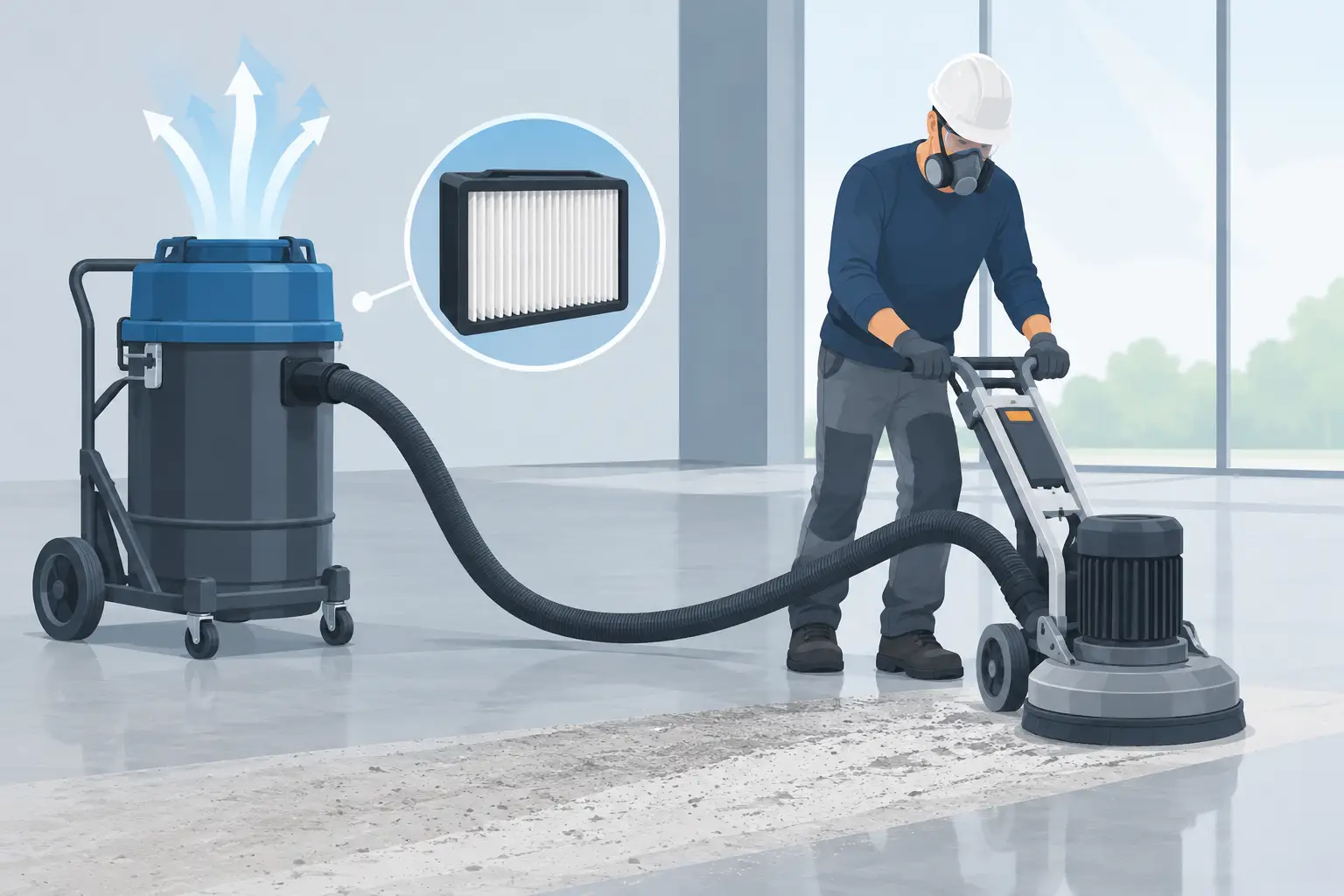
Concrete grinding can turn a garage, shop, retail space, or warehouse into a dust problem fast if the work is not properly contained. Fine concrete dust does not stay near the grinder. It can move through the work area, settle on equipment, and create a major cleanup burden after the crew leaves. More importantly, poor dust control is usually a sign that surface preparation is being treated as an afterthought.
This HEPA concrete dust control guide explains what property owners should expect when a concrete floor is ground, repaired, polished, or prepared for an epoxy coating. The goal is not simply to keep a jobsite looking cleaner. Proper dust collection supports safer work, better preparation, and a more dependable finished floor.
Why Concrete Dust Control Matters Before Coating
Concrete is not a perfectly smooth, clean slab waiting for a new coating. Many floors have old paint, sealers, adhesives, curing compounds, weak surface paste, tire residue, oil contamination, or previous patchwork that must be addressed before epoxy can bond correctly. Mechanical grinding is one of the most effective ways to open the concrete surface and create the profile a coating system needs.
That grinding process produces fine dust. Without the right collection equipment, the dust can spread across the property and interfere with other trades, inventory, vehicles, finished walls, and nearby work areas. In an occupied commercial facility, that disruption can be more than inconvenient. It may require extra downtime, extensive cleaning, and careful scheduling around employees or customers.
Dust also matters to the coating itself. A floor must be thoroughly cleaned after preparation, but starting with a dust-controlled process helps prevent loose debris from finding its way back onto the slab. Better containment gives installers a cleaner path from grinding to repair work, moisture-barrier application, and final coating installation.
What HEPA Dust Collection Actually Does
A HEPA dust collector is designed to capture very fine particles before they become airborne throughout the work area. On a professional grinding setup, the collector connects directly to the grinder through a properly sized hose and shroud. As the machine cuts the concrete surface, dust is pulled into the collection system instead of being allowed to billow across the room.
The word HEPA matters because ordinary shop vacuums and basic filter systems are not built for the same level of fine-dust filtration. A true HEPA system is intended to filter extremely small particles, provided the equipment is maintained, sealed, and operated correctly. The collector is only one part of the system. Hoses, grinder shrouds, filter condition, collection bags, and operator technique all affect real-world performance.
That is why a small handheld vacuum is not a substitute for a professional dust-control setup on a full garage, warehouse, or commercial floor. The size of the grinder and the amount of material being removed must be matched with adequate airflow and collection capacity. If the collector cannot keep up, dust escapes at the grinding head and the benefit is lost.
HEPA Collection Is Not a Replacement for Good Jobsite Planning
Even with HEPA equipment, some work requires added containment. Edge grinding, crack repair, demolition, transitions, and areas around posts or shelving may call for extra attention. Plastic barriers, temporary isolation, floor protection, and careful sequencing may be necessary when a project sits next to finished spaces or active operations.
A good contractor evaluates the entire site, not just the square footage of concrete. A detached garage is handled differently than a medical office, retail showroom, auto shop, food-service area, or warehouse with stored inventory. The right plan depends on how the space is used, what needs protection, and whether the work must be completed in phases.
The Connection Between Dust Control and Surface Preparation
A clean-looking floor is not automatically ready for epoxy. The real question is whether the concrete has the proper surface profile, whether damaged areas have been repaired, and whether moisture or contamination could compromise the coating system.
Grinding with heavy-duty equipment removes weak material and creates texture for mechanical bond. It can also help level uneven spots, blend repairs, remove failed coatings, and prepare concrete for polishing or resurfacing. HEPA collection allows that necessary mechanical work to happen with far less airborne dust than an uncontrolled process.
There is a trade-off worth understanding. Aggressive grinding may be needed to remove thick coatings, stubborn adhesives, or damaged concrete, but it also demands the right tooling and dust-collection capacity. Light grinding may be enough for a clean, sound slab receiving a standard coating system. A floor with moisture issues, oil saturation, spalling, or extensive cracking needs a more detailed plan before decorative flakes or a final color coat ever go down.
At Prime Epoxy Coatings, HEPA dust collectors and heavy-duty grinding equipment are part of the preparation process because durable flooring starts below the finish. A metallic epoxy, flake floor, quartz system, or solid-color coating can look great on installation day. Proper preparation is what helps it keep performing after vehicles, foot traffic, tools, cleaning, and daily use take over.
What Property Owners Should Expect During Grinding
Professional dust control reduces mess, but it does not mean the project has no noise, vibration, or jobsite activity. Grinding equipment is powerful. Property owners should expect the work area to be cleared of movable items, with access planned for equipment, hoses, and power.
For a residential garage, that generally means moving vehicles, storage items, workbenches, and anything that could collect dust or obstruct the crew. In a commercial setting, it may mean moving merchandise, protecting equipment, setting a work window, or completing the floor in sections to keep part of the facility operating.
Before work begins, ask how the contractor will handle doors, nearby rooms, HVAC concerns, finished surfaces, and cleanup. The answer should be specific to your building. A professional should also explain whether the floor needs crack repair, joint treatment, patching, moisture mitigation, leveling, or additional grinding beyond the original scope.
Do Not Judge Preparation by Dust Alone
A nearly dust-free jobsite is a good sign, but it is not the only measure of quality. The contractor still needs to inspect the slab, select the right diamond tooling, maintain the equipment, and verify that the concrete is ready for the intended system.
Likewise, some dust at detailed edges or during certain repair steps does not automatically mean the job is being done poorly. The key is whether dust is being actively managed through proper equipment, containment, cleanup, and work practices. No contractor should promise that construction creates zero dust. A capable contractor should have a clear plan to keep it controlled.
Choosing the Right Approach for Your Space
The best concrete dust-control plan depends on the project. A garage coating may require a straightforward one-day grinding and coating schedule if the slab is sound and dry. A commercial floor may need night work, phased sections, greater containment, and coordination with other contractors. An older basement may need moisture testing and repair work before a coating is even considered.
If your floor has been painted, sealed, exposed to automotive fluids, damaged by freeze-thaw cycles, or covered in old adhesive, bring that up during the estimate. Those details affect preparation, material selection, labor time, and the type of dust-control measures needed. Clear information up front helps prevent surprises once equipment arrives.
A quality epoxy or polished-concrete project is not built on a quick cosmetic cover-up. It is built on a properly prepared slab, controlled work conditions, and materials suited to how the floor will actually be used. Ask for a free estimate, discuss the condition of your concrete, and make sure dust control is part of the plan before the grinder ever touches the floor.
Leave a Reply