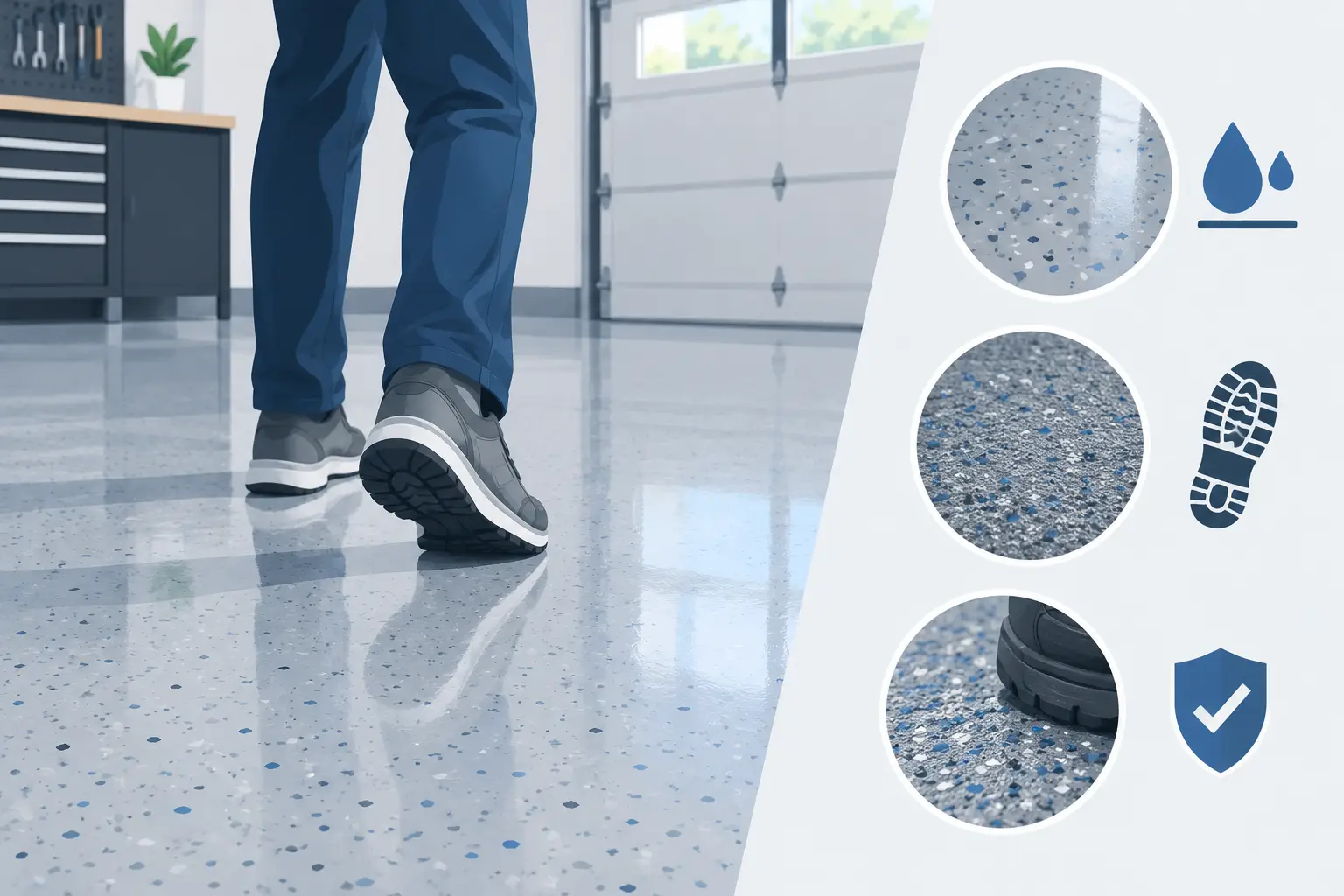
A garage floor can look clean, bright, and tough right up until rainwater, snowmelt, or a little spilled oil changes the way it feels underfoot. So, is epoxy flooring slippery? It can be, but it does not have to be. The answer depends on the coating system, the texture built into it, the type of traffic using the floor, and how the concrete was prepared before installation.
A smooth, high-gloss epoxy surface has less texture than bare broom-finished concrete. When water, oil, soap, or mud sits on that smooth surface, traction drops. That is true of many hard floors, including polished concrete, tile, and sealed concrete. The right epoxy system accounts for that reality instead of treating every garage, shop, showroom, or commercial space the same.
Is Epoxy Flooring Slippery When Wet?
Any floor is more likely to be slippery when it is wet. Epoxy is not a magic exception. A glossy solid-color coating installed with no traction additive may feel slick under wet shoes, especially near an entry door, vehicle parking area, utility sink, or workbench.
The bigger question is whether the floor has been specified for how you actually use the space. A decorative floor in a dry basement does not need the same level of texture as a commercial entryway that sees rain, salt, and foot traffic all winter. A workshop where oil or coolant may spill calls for a different approach than a living area or retail display floor.
Epoxy becomes a much safer choice when the coating includes a broadcast material or traction additive suited to the environment. This creates small points of texture that help shoes and tires grip the surface without making the floor difficult to sweep or mop.
What Makes an Epoxy Floor More or Less Slippery?
Traction is built into the system through material choices and installation methods. The finish matters, but it is only one piece of the job.
Smooth solid-color and metallic finishes
Solid-color epoxy and metallic epoxy can create a sleek, continuous appearance. They are popular where a clean, modern look is the priority. Because these systems can be smooth, they may need a clear topcoat with a traction additive in areas that get wet or see frequent walking.
There is a trade-off. More texture generally means more grip, but it can also slightly change the look and make detailed cleaning take more effort. The goal is not to make a floor rough. It is to add enough traction for the conditions without turning a cleanable finished floor into a hard-to-maintain surface.
Flake epoxy systems
Flake epoxy is a practical choice for many garages, basements, workshops, and commercial back-of-house spaces. Colored vinyl flakes add visual depth, help disguise dust and minor marks, and create a more textured profile than a plain smooth coating.
A full broadcast flake system is often a strong balance of appearance, durability, and everyday traction. It still needs to be finished correctly. The topcoat and its texture determine much of the final underfoot feel, particularly when the floor is wet.
Quartz granular epoxy
For spaces that need added durability and dependable footing, quartz granular epoxy is often the better fit. The colored quartz aggregate creates a tougher, more textured surface than many decorative systems. It is a common option for commercial facilities, food-service-adjacent areas, locker rooms, service counters, and other locations where wet conditions or heavy foot traffic are part of the job.
Quartz systems are not necessary for every residential floor. But when safety, texture, and heavy use are high on the list, they deserve a serious look.
Clear traction additives
A traction additive can be mixed or broadcast into a topcoat to increase grip while preserving the basic color or decorative design below. The material and amount used should match the setting. Fine additives can provide subtle traction for a residential space, while more aggressive texture may be appropriate for industrial or exterior-adjacent areas.
Too little additive may not solve the problem. Too much can create an unnecessarily coarse finish that holds dirt and feels abrasive. This is where a professional recommendation is worth more than a one-size-fits-all kit.
The Floor’s Use Should Set the Traction Level
Before choosing an epoxy color or finish, consider what reaches the floor on a normal day. In East Central Indiana and Southwest Ohio, garages often deal with wet vehicles, snowmelt, road salt, leaves, and muddy work boots. A coating built for dry decorative use may not be the right system for that environment.
For a residential garage, a flake epoxy system with an appropriate topcoat texture is often a practical starting point. It provides a finished look while helping improve footing during normal vehicle and foot traffic. Homeowners who regularly work on vehicles, bring in lawn equipment, or use the garage as a workshop may benefit from additional traction in specific zones.
Commercial needs can be more demanding. A retail floor may need modest texture that remains easy to clean and comfortable for customers. A warehouse, automotive service area, or production space may need a more aggressive finish based on spills, equipment, cleaning practices, and safety requirements. There is no honest answer that says one epoxy texture is right for every business.
Surface Preparation Affects More Than Durability
People usually ask about slipperiness at the finish line, but the work starts with the concrete. A floor coating is only as dependable as the surface beneath it. Poor preparation can lead to peeling, bubbles, uneven areas, or coating failure. Those problems can create hazards of their own.
Concrete must be evaluated for contamination, weak surface material, cracks, moisture concerns, and flatness. Professional mechanical grinding opens the concrete and creates the profile needed for the coating to bond. It also removes weak or contaminated material that could interfere with adhesion.
At Prime Epoxy Coatings, heavy-duty grinding equipment and HEPA dust collection are part of treating preparation as real construction work, not an afterthought. If the slab needs crack repair, leveling, moisture management, or surface flattening, those issues should be addressed before the decorative coating is installed.
A properly prepared floor also helps the final texture perform consistently. A coating applied over a dirty, glossy, damp, or poorly profiled slab may look acceptable at first, then fail where tires, water, and daily traffic put it to the test.
Practical Ways to Keep Epoxy Floors Safer
Even a well-designed floor needs normal care. Wipe up oil, water, antifreeze, and cleaning solution promptly. Use absorbent mats at entry points where rain and snow are tracked in, but make sure the mats themselves lie flat and do not create a trip hazard.
Use a cleaner recommended for coated floors, and avoid leaving soap residue behind. Some household cleaners can create a film that reduces traction. In garages and shops, keep sawdust, powdery debris, and oily residue under control because they can affect footing even on a textured surface.
Footwear matters too. Smooth-soled shoes can lose grip on wet hard flooring more quickly than work shoes with a defined tread. If employees or customers use the area, the expected footwear and the cleaning routine should be part of the flooring conversation.
When to Ask for More Traction
Ask for a traction-focused recommendation if the floor routinely gets wet, if oils or chemicals are used, if older adults or customers will walk on it, or if your business has workplace safety requirements. It is also smart to discuss traction around exterior doors, wash areas, floor drains, ramps, and vehicle bays, even when the rest of the floor can remain smoother.
The best epoxy floor is not simply the shiniest one or the roughest one. It is the system built for the concrete, the traffic, and the conditions it will face. During a free estimate, bring up where water enters the space, what gets spilled, and who uses the floor. Those details make it possible to build grip into the job before the first coat goes down.
Leave a Reply