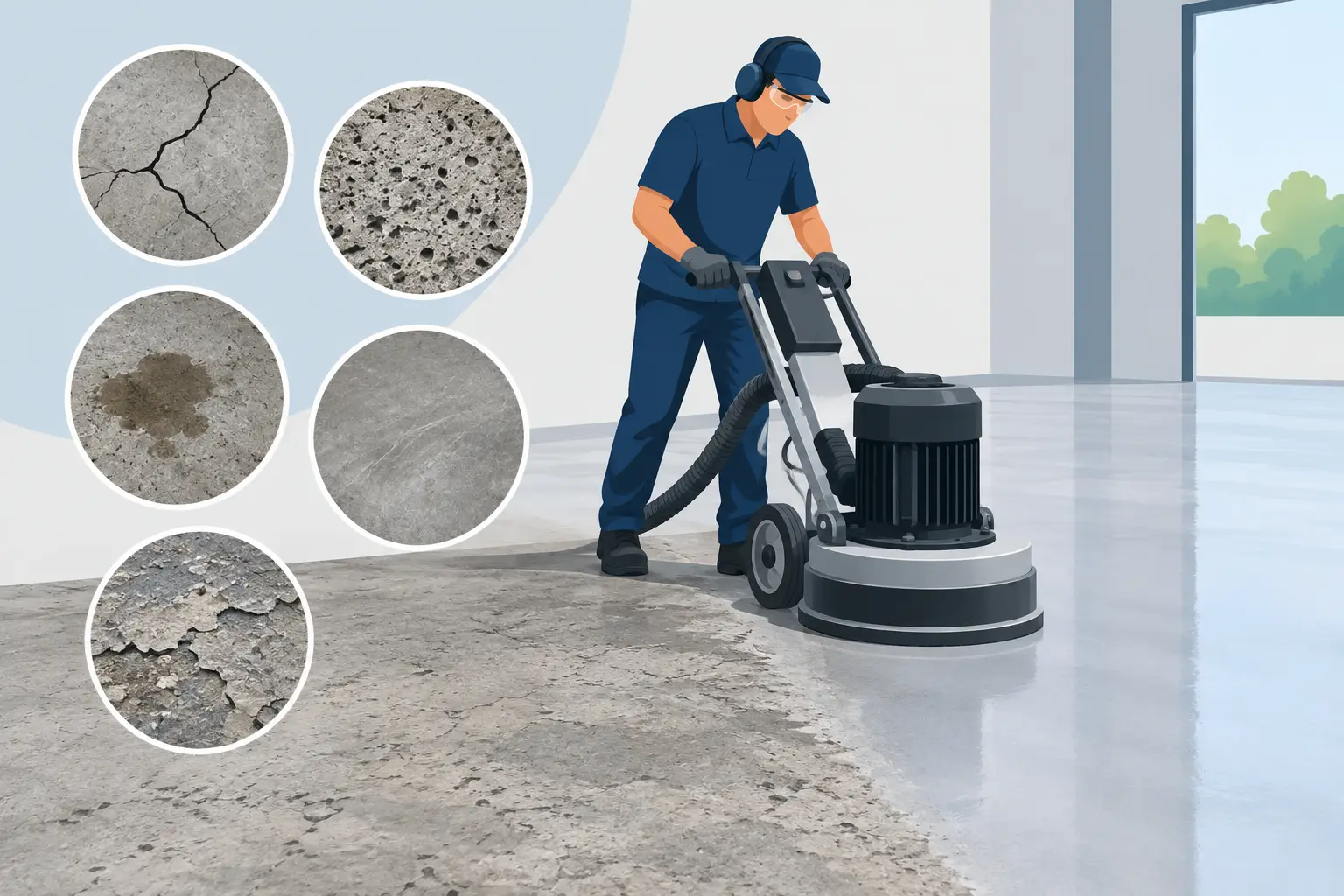
A new epoxy floor can look great on day one and still fail early if the concrete below it was not prepared correctly. Knowing the signs concrete needs grinding helps you address the real condition of the slab before choosing a coating, polish, patch, or leveler. Grinding is not a cosmetic extra. It is often the work that makes the rest of the project hold up.
Concrete changes over time. Garage floors absorb oil, basement slabs collect old paint and adhesive, and commercial floors take years of traffic, impacts, and cleaning chemicals. Some surfaces only need light mechanical preparation. Others need heavier grinding to remove weak material, flatten high spots, or create the proper profile for a new coating system.
1. Your Concrete Has Peeling Coatings or Paint
If old paint, sealer, epoxy, glue, or another coating is peeling, flaking, or wearing through, grinding is usually the right place to start. Applying a new product over failing material only transfers the old failure into the new floor.
A contractor needs to get down to sound concrete, not simply cover what is visible. Heavy-duty grinding equipment removes loose coatings and creates a clean, consistent surface for the next system. This is especially important in garages, auto shops, retail spaces, and work areas where tires, dropped tools, moisture, and regular foot traffic put pressure on the floor.
Not every old coating needs to be removed completely. If an existing coating is firmly bonded and compatible with the new system, it may be possible to prepare it differently. That decision should be based on adhesion testing and the condition of the surface, not guesswork.
2. The Floor Feels Uneven or Has Noticeable High Spots
A concrete slab may look flat until you roll a cabinet, pallet jack, office chair, or piece of equipment across it. If it catches at joints, rocks on a high spot, or slopes where it should not, the concrete may need grinding and surface flattening.
Grinding can reduce raised edges, high seams, old patch ridges, and uneven areas left from previous repairs. It is commonly used before installing decorative coatings, polished concrete, resilient flooring, or other finishes that show every imperfection below them.
Grinding is not the same as leveling. Grinding removes material from high areas. Leveling fills low areas. Many floors need both steps: grind the high spots first, then use an appropriate repair or leveling material where the slab remains low. That process produces a better finished floor and avoids wasting material trying to fill problems that should have been mechanically corrected.
3. Water Soaks In Unevenly or Pools on the Surface
Water tells a useful story about concrete. If it beads up across much of the floor, there may be a sealer, curing compound, wax, or contaminant blocking proper coating adhesion. If it quickly disappears in some places but pools in others, the surface may have inconsistent density, texture, or slope.
A simple water check is not a full moisture test, but it can reveal visible concerns. In a garage, water that pools near the overhead door or along a wall can lead to staining, slippery conditions, and coating problems if the floor is not properly prepared. In commercial settings, ponding water can affect cleaning routines and create safety concerns.
Grinding opens the concrete surface and removes many surface films. It can also help correct shallow high points that direct water the wrong way. However, grinding alone will not fix every drainage issue. Major slope problems, active moisture vapor, or water entering through walls may require additional repairs or a moisture barrier before a coating is installed.
4. Oil, Grease, or Chemical Stains Keep Coming Back
Dark stains from oil, transmission fluid, grease, fertilizer, battery acid, and household chemicals are common on garage and workshop floors. Cleaning matters, but a pressure washer or degreaser cannot always pull contaminants out of porous concrete.
When oil has penetrated deeply, the affected concrete may need aggressive cleaning, mechanical grinding, or in severe cases, removal and repair of damaged areas. Coating over contaminated concrete can cause fish eyes, poor adhesion, discoloration, or peeling. The stain may be out of sight, but it is still part of the substrate.
This is why surface preparation should be based on the floor in front of you. A lightly used residential basement does not get treated the same way as an auto repair bay. The right preparation process depends on the contaminant, how deeply it has penetrated, the intended coating, and the service the floor will see after installation.
5. The Surface Is Dusty, Soft, or Breaking Down
Concrete that produces a fine powder when swept may have a weak surface layer. You may notice dusty footprints, small pits, exposed sand, or edges that continue to chip under normal use. This condition can result from age, poor finishing, freeze-thaw exposure, moisture issues, or a weak concrete mix near the surface.
A coating needs solid concrete to bond to. If the top layer is chalky or deteriorated, it cannot provide a dependable foundation. Grinding removes weak material until sound concrete is exposed. From there, cracks, spalls, and pits can be repaired with materials designed for the coating system.
Do not assume every crack means a floor needs to be torn out. Many cracks can be prepared and repaired successfully. The key is identifying whether a crack is stable, moving, caused by settlement, or connected to a larger moisture or structural issue. A professional inspection helps separate a repairable floor from one that needs more extensive work.
6. You Can See Trowel Marks, Rough Patches, or Old Repairs
Concrete is rarely perfect, especially in older homes and working buildings. Trowel marks, rough transitions, patch outlines, previous tile removal, carpet adhesive, and thinset residue can all show through a finished floor. Metallic epoxy and polished concrete make these variations even more noticeable because their appearance depends heavily on a uniform surface.
Grinding can blend rough patches and remove old residue without relying on harsh chemicals or shortcuts. It also gives installers a clear view of the actual slab condition. Once old materials are removed, they can see where cracks need repair, where a low spot needs leveling, and where moisture-related damage may be hiding.
For a decorative flake epoxy floor, a consistent profile helps ensure proper resin penetration and coverage. For polished concrete, the grinding stages are the finish process itself. Different goals require different tooling, but both depend on experienced operators and equipment built for concrete work.
7. You Are Installing Epoxy, Polish, or a New Floor Covering
Even a slab that looks clean and smooth may need grinding before a new finish is installed. Concrete often has a hard, dense surface called laitance, along with curing compounds or sealers that are not easy to see. These materials can prevent epoxy and other coatings from getting the mechanical bond they need.
Grinding creates the surface profile specified for the product being installed. That profile matters. Too smooth, and the coating may not grip correctly. Too aggressive, and the surface can use more material than necessary or leave unwanted texture in the final floor.
Professional preparation also keeps dust under control. Prime Epoxy Coatings uses heavy-duty grinding equipment paired with HEPA dust collection to capture concrete dust during the process. That is a cleaner approach for occupied homes, garages, retail spaces, and facilities, while helping installers inspect the exposed concrete clearly as they work.
What Professional Concrete Grinding Should Accomplish
Good grinding is not just about making a floor look cleaner. The goal is to create a sound, properly profiled surface that matches the planned finish. Before coating or polishing begins, the crew should be able to identify cracks, weak areas, contamination, moisture concerns, high spots, and low spots.
The right process may include coating removal, crack repair, spot grinding, full-floor grinding, patching, leveling, or a moisture-mitigation system. A floor with minor paint residue needs a different approach than a warehouse slab with joint failure or a garage floor exposed to years of automotive fluids.
When you are considering epoxy or another concrete finish, do not judge the job by the color sample alone. Walk the floor, look for the signs, and ask how the concrete will be prepared before the finish goes down. A free on-site estimate is the right time to discuss those conditions, the intended use of the space, and the preparation needed for a floor that is built for real life.
Leave a Reply