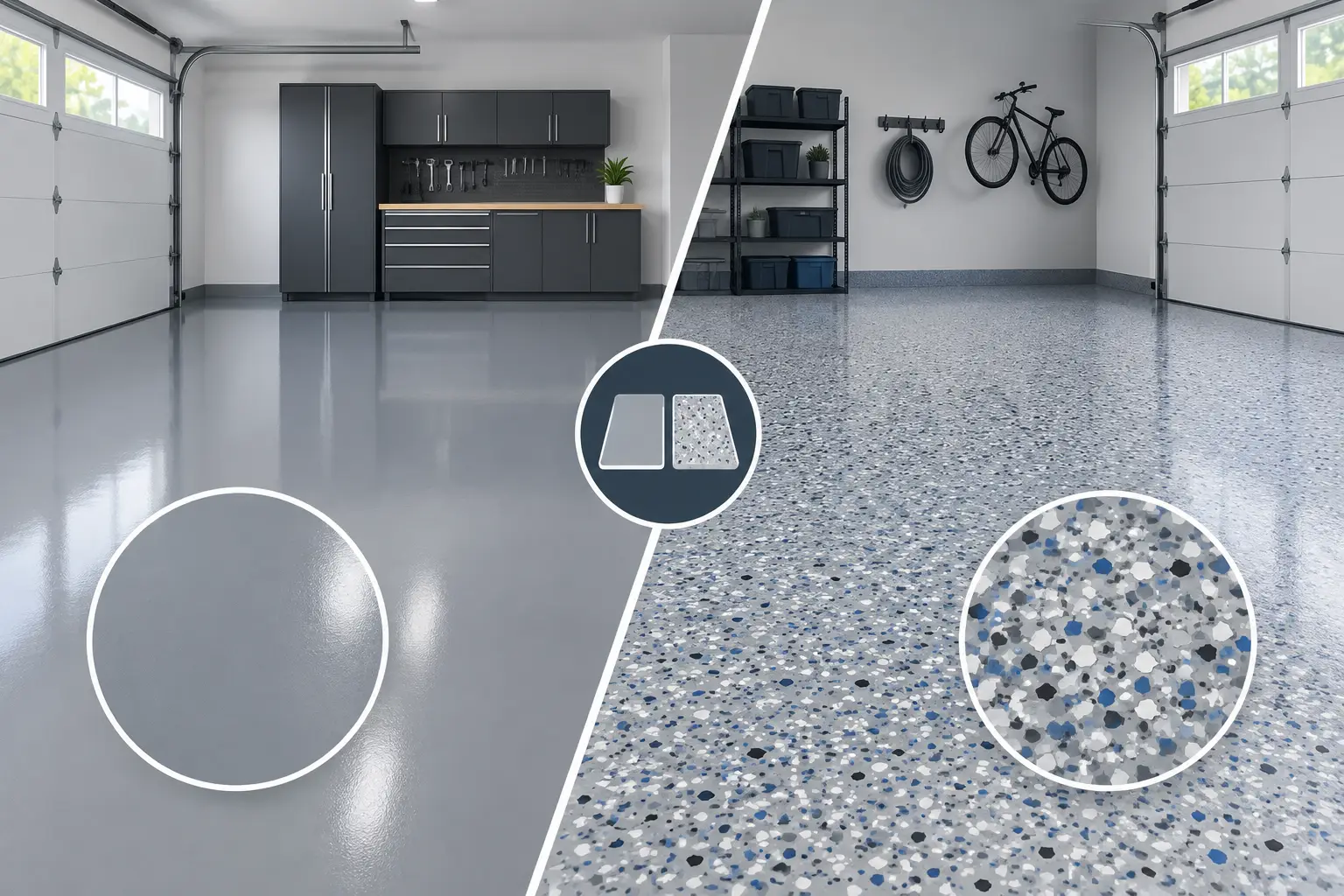
A garage floor can look completely different in a few days, but the right finish has to do more than look good on installation day. When comparing solid epoxy versus flake, property owners are usually deciding between a clean, uniform color and a decorative broadcast system that helps disguise everyday dirt, tire marks, and concrete imperfections. Both can be durable professional flooring systems. The better choice depends on how the space is used, what the concrete needs, and how much visual variation you want to see.
For a workshop, retail space, basement, or commercial area, the decision should start below the surface. A coating is only as dependable as the concrete preparation, moisture evaluation, repair work, and material system beneath the final color.
What Is a Solid Epoxy Floor?
A solid-color epoxy floor uses a single, consistent color across the surface. Gray, tan, black, white, and safety colors are common, but color options can be selected to fit a home’s interior or a business’s brand and work environment. The finished floor has a simple, uninterrupted appearance that can range from satin to gloss depending on the system and topcoat.
Solid epoxy is a strong fit when a clean, uniform look is the goal. It is common in utility rooms, showrooms, commercial spaces, storage areas, basements, and facilities where a straightforward surface makes sense. Because there are no decorative chips breaking up the color, the floor can make a space feel more open and intentional.
That clean look comes with a trade-off. Dust, dried mud, scuffs, and small spills are often easier to notice on a single-color floor, especially with darker colors or high-gloss finishes. That does not make solid epoxy hard to maintain. It simply means the appearance of the floor depends more on regular sweeping and cleaning.
What Is a Flake Floor System?
A flake floor starts with a pigmented base coat. Decorative vinyl flakes are broadcast into that wet coating, then excess flakes are removed after the material cures. The floor is scraped, cleaned, and sealed with a clear topcoat. Full-broadcast flake systems have enough coverage that the base color is mostly hidden, creating a textured, multi-tone finish.
Flake blends can resemble granite, terrazzo, stone, or a custom color mix without the upkeep those surfaces may require. The visual depth makes them a frequent choice for garages, workshops, mudrooms, basements, retail spaces, automotive areas, and busy commercial floors.
The biggest practical advantage is camouflage. Flake patterns are forgiving. They help conceal dust, light debris, small scratches, and the marks that come with pulling vehicles in and out of a garage. A floor still needs to be cleaned, but it can look presentable between cleanings more easily than a perfectly uniform solid-color surface.
Solid Epoxy Versus Flake: The Real Differences
The core difference is appearance, but that difference affects maintenance, traction, repair visibility, and how a space feels after the project is done.
A solid-color floor is more controlled and minimal. It works well when you want the floor to act as a clean backdrop for equipment, vehicles, displays, or finished interior spaces. It can also be the practical choice when a business needs color zoning, defined work areas, or a specific color standard. In the right setting, solid color looks sharp and professional.
A flake floor is more decorative and more forgiving. Its varied pattern softens the appearance of normal garage and shop traffic. Because flakes create texture before the clear coat is applied, a full-broadcast system can also provide more traction underfoot than a smooth solid-color floor. The final level of slip resistance still depends on the topcoat, the flake coverage, and whether an additive is used. No floor coating should be called slip-proof, particularly when water, oil, snow, or cleaning products are involved.
Both options can be built for demanding use when they are installed with the right materials and preparation. The label on the top layer does not tell the whole story. Some floors marketed as epoxy use epoxy as a base coat with a polyaspartic or polyurethane clear coat. Other systems use different resin technologies based on cure time, UV exposure, temperature, and the conditions of the job. What matters is that the complete system is matched to the concrete and the use of the space.
Durability Starts With the Concrete, Not the Color
A solid floor and a flake floor can both fail early if the concrete is not properly prepared. Paint, sealers, adhesives, weak concrete, contaminants, and smooth machine-troweled surfaces can all interfere with adhesion. Applying a coating over those conditions may look acceptable at first, then peel under hot tires, moisture pressure, or regular traffic.
Professional preparation usually begins with mechanical grinding. Heavy-duty grinding equipment creates the surface profile a resinous coating needs to bond. Cracks, spalls, joints, and low areas may need separate repair or leveling work before coating begins. HEPA dust collection matters here too. It keeps the work area cleaner and helps control the fine concrete dust produced during proper preparation.
Moisture is another factor that cannot be ignored. Concrete can transmit moisture vapor even when it looks dry from the top. If testing or site conditions indicate a problem, a moisture barrier or specific coating system may be needed. Skipping that step to save money can put the entire floor at risk.
This is where the lowest quote is not always the best value. A floor coating project is not just a color selection. It is a concrete-preparation project followed by a coating installation. Prime Epoxy Coatings evaluates the condition of the slab before recommending the finish because the right answer for a dry, sound garage slab may not be the right answer for an older basement, a commercial entry, or a shop with oil-contaminated concrete.
Which Floor Is Easier to Clean?
Both solid epoxy and flake floors are much easier to clean than bare concrete. Bare concrete is porous, holds dust, and can absorb oils and spills. A properly sealed coating system creates a nonporous surface that can be swept, vacuumed, and damp-mopped with far less effort.
Solid color makes it easy to see where cleaning is needed. That can be useful in a commercial setting where a visibly clean floor is part of the standard. It also means that a neglected area can stand out quickly.
Flake is often easier to live with in garages and busy workspaces because its pattern hides the small visual clutter of everyday use. The floor is not cleaner just because debris is less visible, so routine cleaning still matters. For either finish, wipe up chemical spills promptly, avoid harsh cleaners not approved for the coating, and use pads or protection under heavy equipment when appropriate.
Choosing Based on Your Space
For most residential garages, a full-broadcast flake system is the easy recommendation. It delivers a finished appearance, handles daily visual wear well, and gives homeowners a broad range of blend choices. It is especially practical for garages that see vehicles, lawn equipment, tools, pets, and changing weather.
For a basement, home gym, showroom, office-adjacent workspace, or modern interior, either option can work. A solid color may better fit a clean contemporary design. Flake may be the better choice when the slab has repaired areas or when you want less day-to-day visibility of dust and scuffs.
Commercial and industrial decisions need a closer look. A retail space may benefit from a decorative flake floor that stays attractive through customer traffic. A service area may need a solid color with safety markings or designated work zones. Warehouses and facilities may need a system selected around traffic loads, chemicals, equipment, cleaning practices, and downtime requirements rather than appearance alone.
Do Not Choose From a Sample Chip Alone
Samples are useful, but they cannot show you the whole job. Ask how the concrete will be prepared, whether repairs are included, how moisture will be addressed, what resin and topcoat will be used, and how the selected finish performs in your actual environment. A good contractor should be able to explain those details plainly.
The best floor is the one that suits the slab, the traffic, and the way you want the room to look a year from now. If you are torn between a crisp solid color and the forgiving texture of flake, schedule a free estimate and look at the concrete first. That conversation will tell you more than a color board ever can.
Leave a Reply