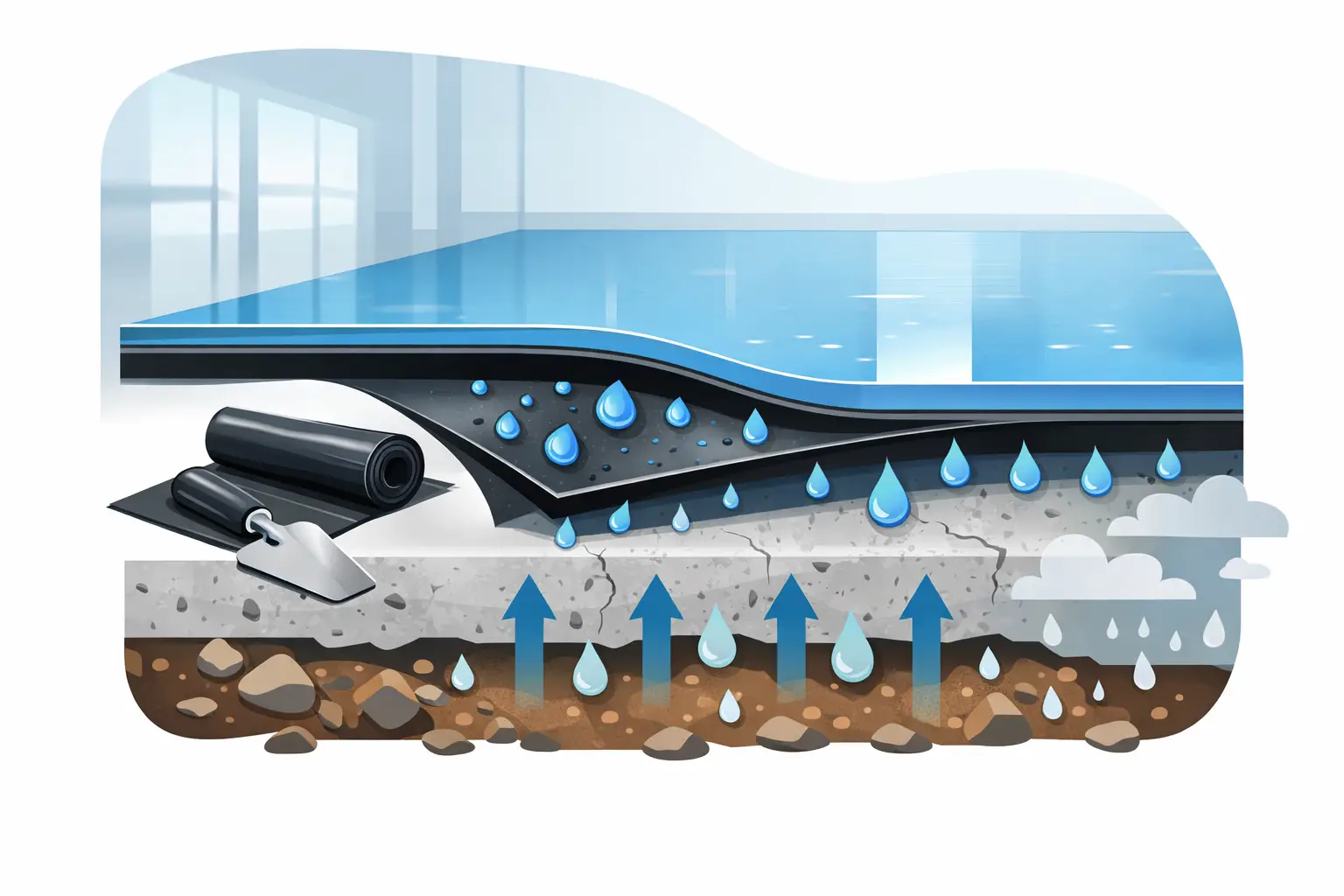
A concrete moisture barrier before epoxy is not an automatic add-on, but it can be the difference between a floor that performs for years and one that bubbles, peels, or discolors early. Concrete may look dry on the surface while water vapor continues moving upward through the slab. Before coating a garage, basement, showroom, shop, or commercial workspace, that moisture needs to be evaluated the right way.
Epoxy is a durable finish when it is installed over properly prepared concrete. It is not a cure for an active moisture problem. At Prime Epoxy Coatings, surface preparation starts with understanding the concrete itself: its condition, its profile, its repairs, and its moisture level.
What a Moisture Barrier Does Before Epoxy
A topical moisture barrier, often called a moisture vapor barrier or moisture mitigation system, is a specialized coating applied directly to prepared concrete before the epoxy system. Its job is to reduce the amount of moisture vapor that can pass from the slab into the epoxy layers above it.
That distinction matters. A moisture barrier installed beneath a concrete slab during construction is a different product and serves a different purpose. For an existing floor, the concern is whether moisture vapor is still coming through the concrete and whether a professionally applied topical barrier is needed before the decorative or protective epoxy coating goes down.
When moisture vapor pushes against an epoxy coating from below, the pressure can break the bond between the coating and concrete. The result may be blistering, bubbling, peeling, cloudy areas, or complete delamination in sections of the floor. Once that bond fails, putting another coat over the damaged area is rarely a lasting repair. The failed material has to be removed, the concrete properly prepared again, and the moisture issue addressed.
Why Concrete Can Hold Moisture Long After It Looks Dry
Concrete is porous. It absorbs and releases moisture, and it can transmit water vapor from the ground below. A slab can feel dry to the touch, show no standing water, and still produce enough vapor transmission to create trouble for certain coating systems.
New concrete is one common example. Concrete needs time to cure, but cure time alone does not tell the whole story. Slab thickness, weather, mix design, jobsite conditions, drainage, and indoor humidity all affect drying. A floor poured recently may not be ready for epoxy just because the calendar says it has been a few weeks.
Older slabs can have moisture concerns too. Basements and ground-level spaces are more likely to face vapor movement, especially if there is poor exterior drainage, no under-slab vapor retarder, a high water table, or seasonal humidity changes. Some garage slabs also take on moisture through cracks, open joints, or water that repeatedly enters around overhead doors.
A white, powdery residue called efflorescence can be a warning sign. So can recurring dark patches, musty odors, dampness after rain, flaking concrete near walls, or old paint that repeatedly peels. These signs do not automatically mean a moisture barrier is required, but they are reasons to investigate before installing an epoxy floor.
How Moisture Is Evaluated Before Epoxy
Reliable decisions come from preparation and testing, not guesswork. Taping plastic to the floor or judging the slab by appearance may reveal obvious moisture, but those quick checks are not enough to qualify a floor for a professional coating system.
Depending on the project, moisture evaluation may include relative humidity testing within the slab, calcium chloride testing that measures moisture vapor emission, and a close inspection of the floor and surrounding conditions. The proper test method and acceptable limits depend on the coating materials being used. Every epoxy, primer, and moisture mitigation product has its own performance requirements.
Testing should be done on concrete that represents real job conditions. If the building is not enclosed, the HVAC is not operating normally, or the slab has been recently exposed to water, results can be misleading. An experienced installer considers the test results alongside the age of the slab, the condition of the concrete, the building use, and the history of moisture in the space.
This is why professional consultation matters. A one-size-fits-all answer can cost more later. Some floors need a moisture barrier. Others need crack repair, drainage corrections, concrete grinding, or a different coating system. Some need more time to dry before any coating work begins.
When a Concrete Moisture Barrier Before Epoxy Makes Sense
A moisture barrier is commonly considered when moisture test results exceed the limits of the planned epoxy system. It may also be a smart part of the system when a slab has a documented history of vapor-related failures, sits below grade, or is located in an environment where moisture conditions are likely to fluctuate.
Commercial spaces often benefit from a careful moisture review because coating failure can disrupt business operations. A warehouse, retail floor, automotive service area, or food-service workspace may have equipment, inventory, staff, and customers depending on that floor every day. Paying attention to vapor conditions before installation is far less disruptive than shutting down an area to remove a failed coating later.
Homeowners should take the same approach in garages and basements. A flake epoxy floor can transform a garage, but only if the coating is bonded to sound, prepared concrete. A basement floor may look like the ideal candidate for a clean solid-color epoxy or decorative metallic finish, yet below-grade moisture conditions need to be checked before choosing the final system.
There is a trade-off. Moisture mitigation adds material, labor, and cure time to a project. It is not necessary on every slab, and adding it without a reason is not the goal. But when the concrete calls for it, skipping that step to lower the upfront price can put the entire coating investment at risk.
The Barrier Is Only as Good as the Surface Preparation
A moisture barrier cannot compensate for weak, contaminated, or poorly prepared concrete. Oil, curing compounds, old paint, glue residue, dust, laitance, and weak surface material all interfere with adhesion. Before a coating system is installed, the concrete must be opened to the correct profile and brought back to a clean, sound surface.
Mechanical diamond grinding is the standard for this work. It removes surface contaminants and creates the texture needed for primers and coatings to grip the concrete. Heavy-duty grinding equipment paired with HEPA dust collection keeps the process controlled and helps prevent the jobsite mess associated with improper prep.
Cracks, spalls, and damaged joints also need attention. A moisture barrier may reduce vapor transmission through the slab, but it is not a substitute for repairing failed concrete. Likewise, it will not solve water coming through an active foundation crack or standing water caused by poor grading outside the building. Those issues should be corrected at the source whenever possible.
Once the slab has been prepared, repaired, and approved for the selected system, the moisture barrier is applied according to its specified coverage rate and recoat window. The epoxy primer, base coat, decorative flake or quartz layer, and protective topcoat can then be installed as a complete system. Each layer has a job to do, and the layers need to work together.
Do Not Confuse Moisture Vapor With Water Intrusion
Moisture vapor is invisible and moves through concrete as vapor. Water intrusion is more direct: visible seepage, puddles, active leaks, or water entering through walls, joints, doors, or cracks. A topical vapor barrier is designed to manage vapor transmission. It is not designed to hold back flowing water or fix a drainage failure.
If a basement has water after heavy rain, or a garage takes on runoff at the door, solve that problem before investing in an epoxy finish. Check exterior grading, gutters, downspout discharge, foundation drainage, door seals, and obvious cracks. Coating over active water issues usually leads to frustration and avoidable repair costs.
Choose the Coating System After the Floor Is Assessed
The best epoxy floor starts with the floor you actually have, not the finish you saw online. Decorative flake epoxy, quartz granular epoxy, metallic epoxy, and solid-color systems can all provide a clean, durable surface. The right choice depends on how the space is used, how much texture is desired, cleaning needs, slip-resistance requirements, and the condition of the concrete underneath.
For some floors, a standard prepared epoxy system is the right answer. For others, a compatible moisture mitigation layer is part of the foundation. The difference should be determined before installation, not after a coating starts to fail.
If you are planning an epoxy floor and have questions about slab moisture, start with an on-site assessment and a free estimate. A careful look at the concrete before the first grinder runs helps protect the work, the appearance of the floor, and the value of the project for years ahead.
Leave a Reply